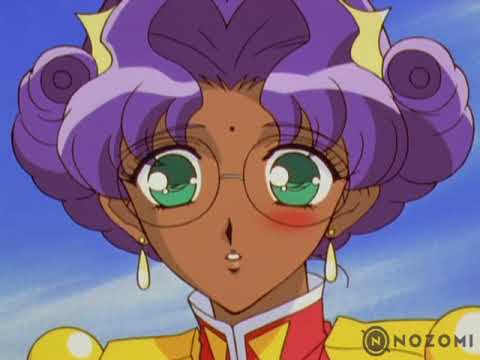
Utena's prince ideal is a role she tries to inhabit
Utena’s uniform and first duel turn an old childhood ideal into a public performance. The anime’s opening frames her courage as sincere while asking what it means to act like the person she hopes to become.
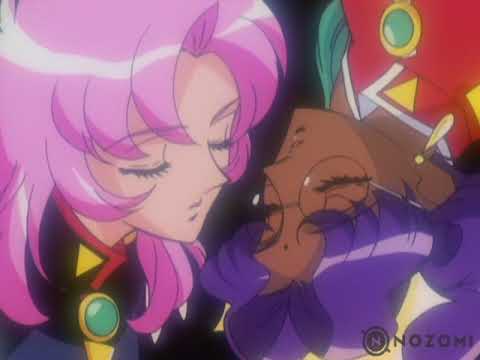
Coverage: Covers Utena’s opening presentation and first duel only; no ending or later revelations.
A uniform that refuses the expected part
Utena Tenjou’s boyish uniform is a choice she makes visible. At Ohtori Academy, where student identity is tightly choreographed through uniforms, ceremonies, and rank, her outfit marks a deliberate departure from the expected feminine presentation. It is not merely a shortcut to looking princely. The cut of the clothes lets her claim a place in the school’s public world without pretending that the rules have already made room for her.
That distinction gives her appearance both confidence and strain. Utena presents herself as someone who can step in when another person needs help, and the uniform makes that promise legible before she speaks. Yet a promise is not the same as a settled identity. She seems to be trying on the image of a prince in the same way a student might wear a role for an audience: earnestly, with the hope that acting it out can make it real.
A childhood ideal becomes a present-tense duty
The opening connects Utena’s prince ideal to a childhood encounter with a princely figure who offered comfort after loss. The memory gives her aspiration an emotional source: she wants to become the kind of person who can change another person’s worst moment. That desire is more intimate than a wish for status. She does not simply admire a prince from a distance; she takes the image as a model for how she should behave.
The anime makes the ideal practical by having Utena respond to distress around her. Her impulse is to intervene, even when the situation is bound up in school custom and the expectations of others. That reflex lends her conviction warmth, but it also suggests a risk: she may treat the role as a responsibility that must always be performed. The opening’s question is not whether her ideal is false. It is whether one person can live up to an image built to answer every call.
The first duel tests the promise in public
Utena’s first duel moves her ideal from self-presentation into action. The encounter is staged as an official contest, with a clear opponent and a formal outcome, but its emotional center is Utena’s decision to act on behalf of another person. Her courage is not abstract bravery in a vacuum. It enters a system where students watch, rules authorize the conflict, and victory carries consequences for someone besides the duelist.
That setting complicates the heroic image. Utena can fight, but she has entered a contest whose terms are set by the academy rather than by the simple moral impulse that brought her there. The anime lets the spectacle make her look extraordinary, while the rules surrounding it remain strange and controlling. Her first victory therefore confirms her willingness to act without proving that she understands the structure she has stepped into.
Sincerity does not make the role effortless
The pleasure of Utena’s opening characterization comes from the gap between confidence and uncertainty. She is not playing at kindness for popularity: her willingness to help feels like a genuine principle. At the same time, the “prince” image gives that principle a highly visible shape, one that can invite other people to treat her as a symbol rather than a young student with limits. The anime’s stylized framing makes her entrance iconic, then leaves room for the awkwardness beneath it.
That tension keeps the character from collapsing into a simple lesson about being oneself. Utena’s chosen role expresses a real conviction, but it is still a role she has to inhabit among classmates and within a school that assigns meaning to appearances. Her opening duel makes the aspiration tangible: she risks something because she wants to protect someone. The ideal matters precisely because she must practice it, not because she has already become its perfect embodiment.
Primary work & further reading
Primary work: Revolutionary Girl Utena. Character and story readings are editorial interpretations. The publisher reference below identifies the work and its premise.