OCTOPATH TRAVELER II’s secondary jobs are answers to battle questions
A practical guide to treating secondary jobs as ways to widen a traveler’s options, expose enemy weaknesses and cover party gaps, with a simple method for testing combinations.
Coverage: Spoiler-light: discusses job and battle systems, not story developments.
Think in questions before choosing a job
A secondary job is easiest to evaluate when you start with a battle problem. Square Enix describes OCTOPATH TRAVELER II as a game where travelers can develop jobs and skills, and its job-system feature explains that changing secondary jobs changes the weapons and skills a character can use. The immediate advantage is broader coverage: a traveler may gain access to a weapon type that helps expose an enemy weakness, or a skill that supports a role your party lacks. [1] [2]
That does not mean every character should receive the job with the most attractive menu. The useful test is whether the new option answers something your current party cannot answer reliably. If enemies keep resisting your available weapons, coverage matters. If your party can break targets but struggles to recover, support may matter more. A job choice is a tool assignment, not a permanent judgment about a character’s worth.
Separate weakness coverage from role coverage
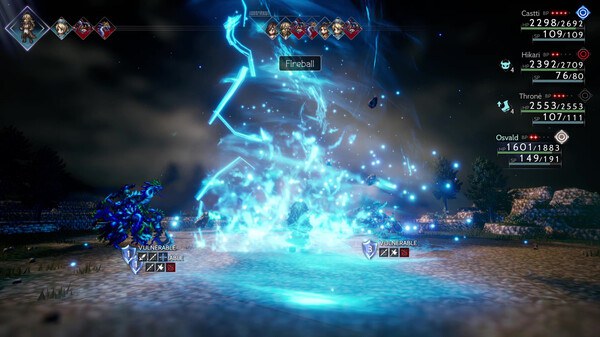
Square Enix’s example of pairing Dancer with Warrior shows how a secondary job can add weapon types—in that example, swords and polearms—to a traveler’s options. More weapon coverage can help with breaking an opponent, but it is only one part of a turn. Before assigning a job, list the weapons your party can currently bring into battle and mark any gaps you have repeatedly encountered. Then compare those gaps with the candidate job’s weapons and skills. [1]
Next, ask what the character will do on turns when a weakness is not available. A job that adds a useful weapon but no helpful action in other moments may be less flexible than one that also contributes healing, buffs or resource management. This is a planning heuristic, not a damage ranking: the official materials establish the systems, while the best fit depends on your party, enemies and unlocked skills.
Use licenses as a party-wide resource
The official job-system guide says basic jobs are obtained through guild licenses, with up to three licenses available for a basic job after fulfilling guild requests. That allows more than one traveler to use the same basic secondary job. It also creates a party-building decision: duplicate access can let two characters cover related needs, but assigning a rare license to one character may be more valuable if it fills a weakness no one else can address. [1]
Treat a license as flexibility you can allocate, not a prize that must go to the character with the highest displayed stat. If a second license is available, try the job on a different traveler and compare the party’s overall coverage. If not, ask which configuration removes the most friction in the next area. The answer can change as you acquire skills and meet different enemies, so revisiting an assignment is part of the system rather than evidence that the first choice was wrong.
A small, reversible test
Choose one job change at a time. Before changing it, note the party’s missing weapon types and the character’s main contribution. After changing it, enter a familiar encounter and check three things: can the party reach more weaknesses, does the character still have a useful turn when no weakness is available, and did another member lose a role that the group depended on? This keeps the comparison legible because you have not also changed several other jobs.
Then keep the assignment only if it improves a problem you actually encounter. If it creates a new gap, move the job or test a different character. Square Enix also notes that support skills are learned through job skills and that travelers can equip a limited number of them, so a job can contribute value beyond its active actions. Build toward a party that has answers across different turns, not a roster where every traveler is trying to do the same job. [1]
Primary work & further reading
Primary work: OCTOPATH TRAVELER II. Character and story readings are editorial interpretations. The publisher reference below identifies the work and its premise.