NieR Replicant: let Words solve one combat problem at a time
A practical NieR Replicant guide to treating Words as adjustable tools: keep a dependable baseline, then tune weapon and magic effects for the enemy or encounter that is actually slowing you down.
Coverage: Spoiler-light; discusses equipment and combat systems without story outcomes.
Treat a Word as a small adjustment, not a permanent verdict
NieR Replicant’s Words are modifiers collected from defeated enemies and attached to weapons, magic, attacks, or defense. Square Enix describes them as buffs and recommends checking the equipped set periodically; the game also offers an auto-equip choice based on the strongest available Words. That system makes Words less like a second skill tree and more like a set of interchangeable answers. [1]
The useful question is not “Which Words are best?” in the abstract. Ask what is currently costing you time or safety. If you are losing ground while approaching an armored Shade, a Word that improves the part of your kit you use to open that distance may matter more than a small damage increase on a weapon you rarely swing. If a boss is already under control, changing everything for a marginal gain can create extra menu work without solving a real problem.
Keep one baseline before you experiment
Start with a stable arrangement that works in ordinary encounters. Think in three layers: the weapon you rely on, one or two spells that address different ranges or enemy behaviors, and defensive support that helps you recover when an approach goes wrong. The official game overview frames the journey around Nier fighting alongside Grimoire Weiss while seeking the Sealed Verses for Yonah; it confirms magic is part of the core action vocabulary, but does not prescribe a universal loadout. The exact mix belongs to the player’s habits and current obstacle. [2]
This baseline gives every later change a comparison point. If you replace several Words at once, a better result does not tell you which change helped. Swap one meaningful modifier, try the same sort of encounter, and notice whether it changed the number of safe openings, the amount of time spent recovering, or the number of actions needed to finish a troublesome enemy. That is not laboratory measurement; it is a practical way to avoid changing equipment by guesswork.
Build around the encounter you have
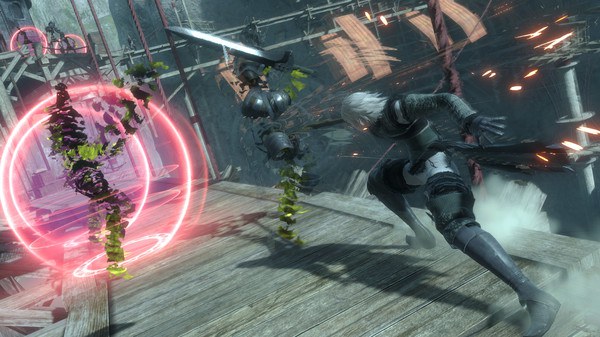
Square Enix’s beginner advice highlights magic against armored enemies and specifically describes using Dark Lance to knock one down before closing for a physical finish. It also notes Dark Blast can keep pressure on enemies at range. Read that advice as a sequence: control the approach, create a safer moment, then use the weapon when distance and timing are favorable. A Word should support one of those steps rather than merely decorate the menu. [1]
For a fast opponent, consider whether you need a safer way to interrupt its rhythm or to make a brief opening count. For a group, ask whether the spell you use to maintain space deserves support over a single-target weapon effect. For a long section with repeated small fights, a modest general-purpose choice may be more useful than a specialized bonus that only applies during one narrow window. The point is to match the modifier to the shape of the problem, not to chase a theoretical maximum.
Use auto-equip as a reference, then inspect the result
Auto-equip is a convenient starting point, not a reason to stop thinking. Square Enix notes that it can place the most powerful Words, while also advising players to check them from time to time rather than after every battle. The practical middle path is to use it when the collection has grown, then inspect what it selected: does the set reinforce the tools you actually use, and does it solve the encounter that prompted the menu visit? [1]
A worked example: suppose an armored enemy repeatedly pushes you away before you can land a physical hit. First preserve the weapon and spell setup you already understand. Then change one relevant Word, use Dark Lance to make the opening, and close only after the knockdown. If the problem becomes easier, keep that adjustment for the next similar encounter. If not, return to the baseline and test a different modifier. You have learned something either way, without rebuilding the whole character around one failed attempt.
Let the menu follow your route
Words reward occasional attention, not constant maintenance. Revisit them when a boss, enemy type, or stretch of exploration changes what you need from combat. Keep the core arrangement familiar, tune one slot at a time, and make the game’s own suggestions work as a prompt for judgment. That approach keeps the system legible: a Word earns its place because it makes one part of the fight safer, clearer, or more dependable.
Primary work & further reading
Primary work: NieR Replicant ver.1.22474487139…. Character and story readings are editorial interpretations. The publisher reference below identifies the work and its premise.