NieR Replicant's errands change the pace of heroism
Fishing, deliveries, and returns to familiar villages give NieR Replicant a tempo beyond combat. These ordinary actions make heroism feel like an interruption in a life still shaped by local needs and obligations.
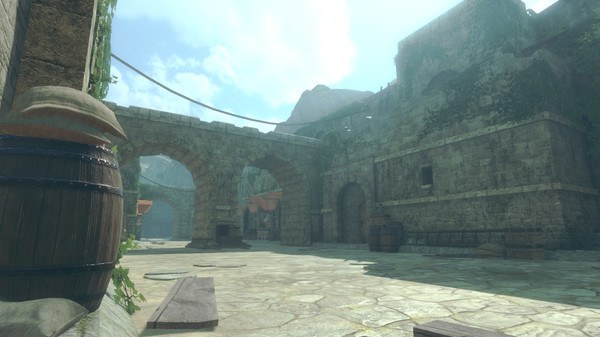
Coverage: Early game only; discusses fishing, deliveries, village visits, and the contrast between errands and combat.
The journey has a local tempo
NieR Replicant’s early journey does not move at one continuous heroic pitch. Alongside danger and the search for a cure, it asks the player to fish, carry deliveries, and return to villages. These activities change the sense of time. Combat makes each encounter feel immediate; an errand sends attention back to people, places, and practical needs that do not vanish when the main quest calls. The world gains a lived rhythm because progress includes pauses for work that is small in scale.
Those pauses matter as a way to read the game’s pacing. Nier is not only a fighter advancing toward a dramatic objective. He is also a person who goes places for other people and comes back through familiar spaces. A delivery connects two points that can otherwise feel like stops on an adventure route. Returning to a village gives the journey a social geography: places become familiar enough to revisit, and local requests make those visits carry a reason beyond passing through.
Fishing slows action into attention
Fishing offers a different kind of pace from fighting. It requires the player to attend to a task whose value is not measured by defeating an enemy in the moment. The activity asks for patience and attention to a small process, qualities that sit at a deliberate angle to the urgency of Nier’s larger aim. That contrast gives fishing more than the feel of a detached diversion. It makes room for an activity whose rhythm is repetitive and focused, an interval in which the adventure’s pressure can recede without disappearing.
A hypothetical moment clarifies the choice this creates: imagine reaching a fishing spot while a main objective still presses forward. Continuing immediately preserves the mission’s momentum; taking time to fish shifts the session toward patient work and the possibility of gathering what the task may require. Neither choice represents the only proper way to play. The useful decision is about the mood you want the next stretch to have. Fishing lets the player choose a slower beat, then return to the urgent thread with that contrast in mind.
Deliveries turn movement into service
Deliveries shape movement differently. Their logic is not simply to reach a new destination but to transport something on another person’s behalf. That changes how travel feels: the route becomes a small service, and completion depends on carrying a responsibility across space. In a game where Nier’s own reasons for traveling are emotionally charged, these tasks offer a modest echo of the same habit. He keeps moving because someone else has a need, even when that need is local rather than tied to the central crisis.
It would be a mistake, though, to treat every request as equally necessary or rewarding. The game’s side activities vary in appeal, and an errand’s existence does not make it mandatory. A player can decide that a particular diversion fits the evening’s pace, or that the main objective is more compelling right now. The design’s value is in offering another tempo, not in demanding that every player follow every branch. That freedom makes an errand feel like a choice about attention as much as a task to clear.
Returning gives heroism a home
The repeated movement back to villages and familiar spaces completes this change in rhythm. A hero’s route often feels like a one-way line away from ordinary life. Here, the possibility of returning keeps ordinary life in the composition. Nier’s actions take place among communities and routines that continue to matter while he pursues a larger goal. Familiarity turns a return into more than logistical backtracking: it can feel like re-entering a network of needs rather than resetting at a convenient hub.
The game’s errands therefore make heroism less like a permanent sprint and more like a pattern of departure and return. Fishing makes time slow down; deliveries make travel answer to other people; village visits anchor action in places that can be revisited. None needs to be compulsory to do its work. Together, they give the player room to feel the difference between a crisis and a day’s obligations. Nier’s journey remains urgent, but its pauses let the world around that urgency stay human in scale.
Primary work & further reading
Primary work: NieR Replicant. Character and story readings are editorial interpretations. The publisher reference below identifies the work and its premise.