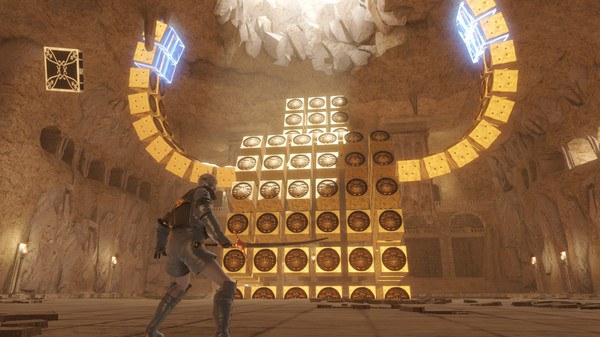
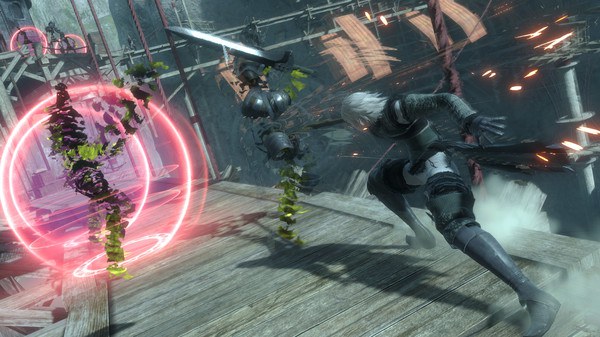
NieR Replicant’s weapons and magic answer different combat questions
A spoiler-light practical guide to treating NieR Replicant’s melee weapons and Sealed Verses as complementary tools, with a quick way to test one combat adjustment at a time.
Coverage: Spoiler-light: discusses combat systems and general encounters, avoiding story turns.
Build a response, not a favorite button
NieR Replicant gives its young protagonist both physical weapons and magic. Square Enix’s combat overview describes a deliberate combat identity for this version rather than a copy of NieR:Automata, while the official game page places the journey around the protagonist, Grimoire Weiss and the search for the Sealed Verses. That pairing suggests a useful starting rule: treat a weapon and a spell as two answers to different moments, not as rival builds. [1] [2]
A weapon keeps you close enough to read an enemy’s movement and maintain pressure. A Sealed Verse can reach a target, interrupt a pattern or give you space to reposition. The practical question is therefore not “which is strongest?” but “what is the encounter asking me to solve right now?” That question stays useful even as the game adds more options.
Let the enemy tell you when to change distance
Start a fight with the weapon you find easiest to control. Notice whether the enemy approaches, retreats, or leaves a brief opening after an attack. If the approach is awkward or the target is out of reach, use magic to create a safer response before returning to melee. Square Enix’s combat discussion emphasizes the distinct feel of the game’s action, so adapting the rhythm to its own tools is more grounded than importing assumptions from the sequel. [1]
For a simple test, spend one encounter using a Verse mainly to make an opening, then use the next to keep pressure from farther away. Compare how often you had to dodge, how long you stayed near danger, and whether the spell actually changed your position. This is a player-side experiment, not a hidden damage formula.
Keep the spell choice narrow enough to read
When several Sealed Verses are available, changing every equipped ability at once makes the result hard to understand. Keep one familiar spell and swap the other to match a specific problem: range, interruption, or a moment when you need room to move. The official pages establish that the game combines weapons and magic, but they do not promise one universal loadout. The choice should follow the target and the player’s control comfort. [1] [2]
A worked example: if a fast enemy closes the gap before a long cast can help, keep the reliable spell and choose a quicker response for the second slot. If a large target gives you safe distance, test whether a ranged Verse lets you act without surrendering all movement. Revisit the setup after the encounter instead of filling every slot just because it is available.
Use one adjustment to learn the weapon set
The game’s weapon variety is most legible when you compare one change at a time. Keep your familiar approach, then try a different weapon against an enemy whose movement you already understand. Watch whether its reach or tempo makes the opening easier to read. If it does not, switch back without treating that as failure: the purpose of the test is to learn what suits the situation, not to prove that every weapon fits every player. [1]
This method also makes upgrades easier to evaluate. A number can rise while the encounter still feels uncomfortable; a different weapon or a spell change may solve the actual friction. Separate those questions instead of changing equipment, magic and tactics together.
A short pre-fight routine
Before a difficult encounter, name the main problem: getting close safely, reaching a distant target, or keeping a clear escape route. Choose the weapon you can control under that pressure, keep a familiar Verse, and use the other slot to answer the problem. Afterward, ask whether that answer changed the fight in a way you noticed. This small loop turns NieR Replicant’s mix of melee and magic into a readable set of choices rather than a menu of effects. [1] [2]
The game’s tone and story remain central, but combat can still be approached with a practical plan. A good setup is not a supposedly perfect build; it is a combination whose job you can explain and whose effect you can judge in the next encounter.
Primary work & further reading
Primary work: NieR Replicant ver.1.22474487139…. Character and story readings are editorial interpretations. The publisher reference below identifies the work and its premise.