The Medicine Seller has to investigate before he can strike
In Mononoke’s opening arc, the Medicine Seller’s sword is not a shortcut through the supernatural. Its use depends on discovering what a haunting is and why it has taken shape, making inquiry part of the danger.
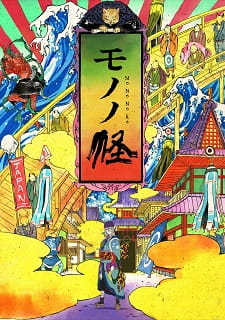
Coverage: Covers the opening setup and the series’ Form, Truth, and Reason framework; does not disclose the opening arc’s resolution.
A weapon with conditions
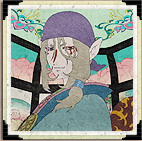
The Medicine Seller arrives with the look of someone prepared for a confrontation: a traveling salesman’s wares, a composed manner, and a sword whose purpose is plainly more than decorative. Yet Mononoke does not let this equipment become an easy answer. The sword cannot simply be drawn whenever a spirit appears. Before he can strike, he must uncover the spirit’s Form, Truth, and Reason. His first task is therefore not combat, but finding out what kind of problem he has entered.
That restriction changes the meaning of strength. The Medicine Seller may possess the power to end a supernatural threat, but power alone does not tell him what the threat is. He has to attend to the people and place around it, where accounts conflict and important facts remain unspoken. The delay makes him seem less like a conventional monster hunter than an investigator working under dangerous conditions: one who cannot responsibly act until he understands the shape of the case.
Form is the shape of the haunting
Form asks what the mononoke is: how it manifests and what shape the supernatural presence takes. The question sounds like classification, but in the opening arc it also trains the viewer to look closely. Strange events do not arrive with a neat label. They are encountered through unsettling images, disrupted rooms, and behavior that resists ordinary explanation. The Medicine Seller’s attention to form makes seeing part of his work, while the series makes clear that a frightening appearance is only a beginning.
This distinction prevents the spirit from becoming a generic obstacle. A visible manifestation can tell the investigator something, but it cannot by itself explain why the haunting has gathered around these people and this setting. The Medicine Seller does not confuse identifying a presence with understanding it. Form supplies a necessary outline; the outline leaves a gap that testimony, memory, and scrutiny must fill. That gap keeps the opening mystery active even when the supernatural is already unmistakable.
Truth tests what people say
Truth concerns what happened, and establishing it means listening past the polished version of events. People may speak from different positions, remember selectively, or protect a fact they do not want exposed. In a story where the danger is supernatural, testimony still has human sources and human limits. The Medicine Seller must compare what he hears with what the setting and the unfolding events suggest, rather than treating any single explanation as a reliable verdict.
The method gives conversation real suspense. A disclosure can change the apparent meaning of an earlier detail, and silence can carry as much weight as an answer. The Medicine Seller’s calm questioning is not an ornamental eccentricity: it is a way to test the stories surrounding the haunting. He seems to recognize that a case cannot be solved by simply deciding who looks suspicious. The relevant truth may be tangled among several people’s accounts, including what they refuse to acknowledge.
Reason connects fact to action
Reason asks why the mononoke has taken this particular shape and why the events have unfolded as they have. It is the interpretive step that connects what can be seen with what can be established. A form without a history is only an image; a collection of facts without an account of their significance is still incomplete. By requiring all three elements, the series makes the Medicine Seller’s eventual strike depend on understanding the relationship between supernatural presence and human circumstance.
That requirement also gives his character a distinctive restraint. He is not presented as someone who treats every frightening presence as an excuse to wield force. His authority comes with an obligation to investigate, and the danger grows as the answers remain uncertain. The opening arc’s setup makes that obligation legible before it supplies a resolution: the Medicine Seller can fight, but fighting is not the first proof of his competence. In Mononoke, the sword becomes meaningful only after observation and interpretation have earned the right to use it.
Primary work & further reading
Primary work: Mononoke. Character and story readings are editorial interpretations. The publisher reference below identifies the work and its premise.