Genius Invokation rewards planning reactions, not just collecting elements
In Genshin Impact’s Genius Invokation TCG, elemental reactions turn the order of play into a resource. A useful deck plan begins with the reaction you want to create, then asks how to get the right element onto the active character at the right moment.

Coverage: Explains general Genius Invokation rules without discussing current card balance or a particular patch.
Start with a reaction, then work backward
Genius Invokation borrows elemental vocabulary from Genshin Impact, but a card match is a sequence of deliberate actions. The official advanced-rules guide treats deck composition, character and action cards, combat actions, and elemental reactions as connected parts of play. That suggests a better first question than “Which powerful card should I add?”: what elemental state am I trying to create, and what needs to happen before it?
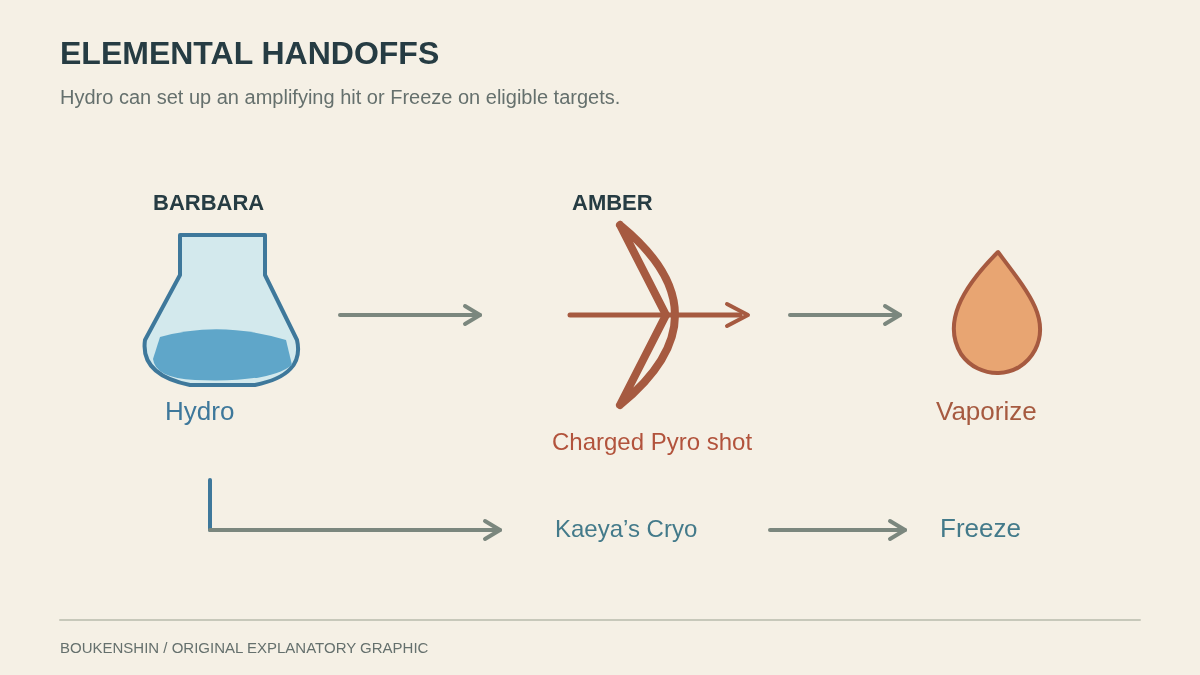
Pick a pair of elements that can produce a reaction in the rules, then identify which character can apply the first one and which action could follow. The point is not to memorize a universal best combo. It is to build a small plan that can survive the opponent changing the active character or forcing you to spend an action defensively. Reactions give a deck direction; they do not guarantee a clean sequence.
Action order is part of the cost
A reaction is only useful if the second application arrives before the opportunity disappears. Every turn therefore has a tempo cost: switching characters, playing a support card, or spending dice on a combat action delays the payoff. If your imagined combo needs three setup moves, compare that with a shorter line that produces a smaller immediate advantage. The shorter route may leave more flexibility for a defense or a follow-up.
This is where deck construction and piloting meet. A character card supplies an available element and its own abilities; action cards shape the conditions around it. Rather than filling every slot with cards that look strong in isolation, ask whether each one advances the planned sequence, helps you change course, or gives you a useful response when the opening fails. A card can be powerful and still be wrong for a plan that cannot afford its timing.
A worked planning example
Suppose your opening active character can apply element A, while a second character can apply element B for a reaction. Before spending dice, map the minimum line: apply A, switch to B, then choose whether to spend the remaining resources on damage or protection. Now test the plan against a simple interruption: if the opponent changes your active character after the first step, can you still reach B without paying an extra switch? If not, reserve a way to restore your intended order.
This is an analytical exercise, not a claim about a specific current deck or card text. Use the in-game card descriptions for the exact reaction and action costs, since the rules can change and individual cards add their own conditions. The exercise helps separate two ideas often blurred together: having the right elements somewhere in a deck, and being able to make them meet at the right time.
Treat reactions as choices, not a checklist
The official Genshin overview describes the broader game’s combat as based on elemental interactions, and the TCG guide gives those interactions a turn-based structure. In a duel, however, reaction value depends on context: remaining dice, the opponent’s threat, and whether spending another action leaves your active character exposed. A reaction that advances your plan can still be a poor move if it uses the resources needed to answer the next attack.
A practical review after a match is to mark the first turn where your intended sequence became impossible. Was the problem a missing character, an expensive switch, or a card that did not support the plan? Adjust the deck or the order of play to address that specific bottleneck. This makes elemental synergy something you can reason about and improve, rather than a slogan that every deck must maximize in the same way.
Primary work & further reading
Primary work: Genius Invokation TCG. Character and story readings are editorial interpretations. The publisher reference below identifies the work and its premise.