Final Fantasy X-2 Garment Grids make a job change a route
In Final Fantasy X-2, a Garment Grid is more than a tray of dresspheres. Its arrangement shapes which roles are ready in battle and whether changing jobs is worth the turn spent getting there.
Coverage: Spoiler-light: this guide discusses mechanics without major story revelations.
Prepare the grid before the fight
A Garment Grid decides which dresspheres a character can use during a battle. Square Enix’s manual says the grid and its placed dresspheres cannot be changed after combat begins, so the important decision happens in the menu beforehand. Treat each grid as a small loadout: which jobs should be available immediately, and which are worth reaching only if the battle develops in a particular way? [1]
That framing is more useful than asking which grid is strongest in the abstract. A party expecting a quick encounter may prefer a simple route to a needed damage or healing role. A longer fight may reward access to a wider set of jobs and the possibility of triggering a gate bonus. The manual distinguishes bonuses from equipping a grid from temporary bonuses gained by passing through gates during a spherechange. Those are different benefits, so inspect what the selected grid actually offers before planning around it. [1]
Read the layout as a sequence
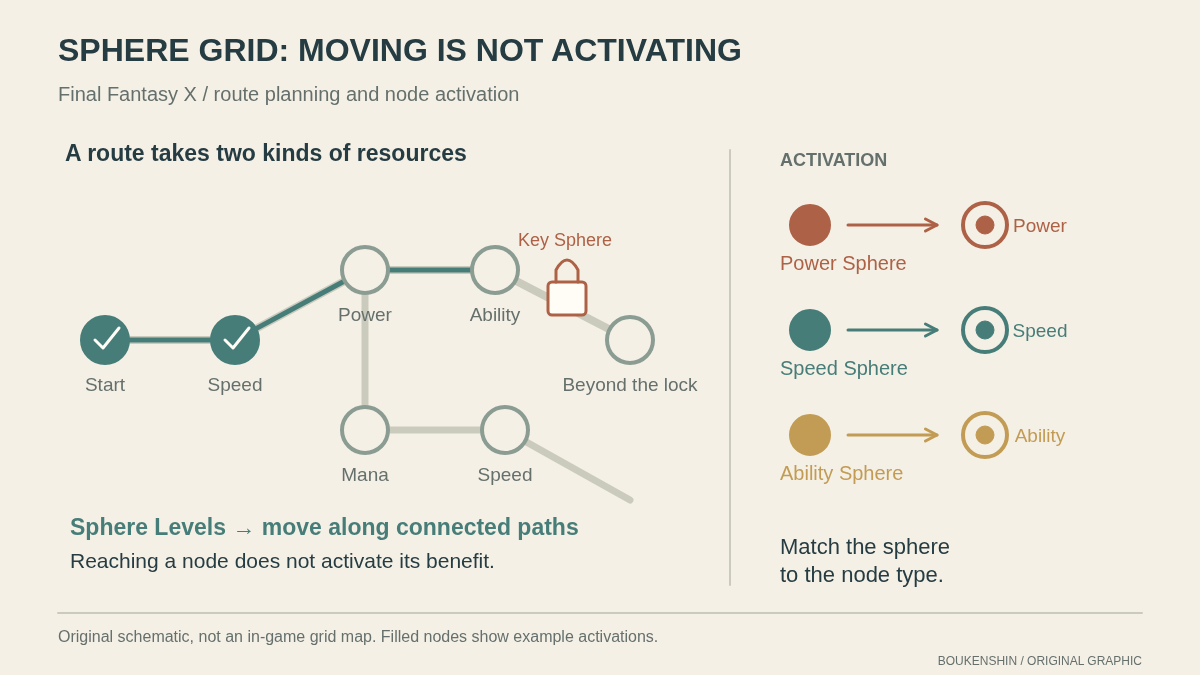
A switch is an action with a destination. Before a difficult battle, trace the order of dresspheres on the grid and note which gates sit between them. The question is not merely “Can this character become a healer?” It is “What must this character pass through to get there, and is the intermediate benefit worth the time?” The route turns a clothing change into a tactical choice rather than a free menu adjustment.
Passing through a gate can grant a temporary bonus or ability, but the manual states that these gains expire when the battle ends. That makes a gate a short-term lever, not a permanent character upgrade. The route can be worthwhile when it improves the current fight; it should not be mistaken for progress that carries into the next encounter. Keeping that distinction clear prevents overvaluing an elaborate path simply because it contains more nodes. [1]
Work a simple party plan
Imagine a character begins on a damage-focused dressphere, while the grid also contains a support role and one gate between them. Before combat, ask what the party needs first. If the opening calls for immediate damage, use the current role and save the change for a lull. If a teammate becomes vulnerable, switching may be more important than continuing the attack plan. If taking the route also crosses a useful gate, count that as a situational bonus, not as a reason to change when the party does not need the new role.
This is a planning example, not a fixed rotation. Enemy behavior, available actions and the selected grid all matter. The useful habit is to state the job of each switch before making it: cover a weakness, restore a capability, or deliberately collect a temporary gate effect. If no clear purpose exists, the switch may be consuming attention without solving a problem.
Build for decisions you can actually use
The number of available options can make a grid feel like a collection project. A more practical approach is to keep a dependable core route and add a second route only when it answers a recognizable need. The Square Enix product description presents X-2 as Yuna, Rikku and Paine searching Spira for answers; in battle, the dressphere system gives that trio a flexible set of roles. Flexibility matters because it allows adjustment, but a plan still needs priorities. [2]
Before committing to a grid, check that its nodes correspond to roles you expect to use and that any gate bonus is reachable without derailing the fight. Afterward, notice whether the plan gave you a meaningful option at the right moment. You do not need to change every character on every turn. A good Garment Grid makes a deliberate change available; it does not demand that every route be traveled.
Primary work & further reading
Primary work: Final Fantasy X. Character and story readings are editorial interpretations. The publisher reference below identifies the work and its premise.