Above the plate, below the plate: reading Midgar
The original 1997 Final Fantasy VII makes Midgar’s class divide part of its physical design. Its plates, slums, mako reactors, and Avalanche’s first mission turn the city into an argument about who benefits from industrial progress.
Coverage: Covers the original 1997 game’s opening Midgar missions and locations only.
A city divided by height
In the original 1997 Final Fantasy VII, Midgar is more than a setting for the opening missions. Its upper plate and the neighborhoods beneath it make inequality visible as a matter of architecture. People with access to the elevated city live above the ground-level districts, while the slums sit in the shadow of the structure that separates them. The arrangement gives social distance a literal direction: privilege is overhead, and the consequences of industrial life collect below.
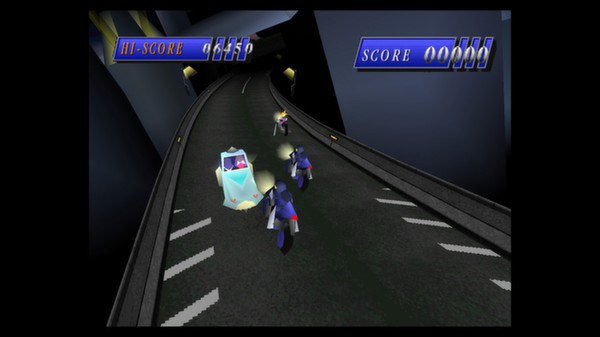
That vertical layout shapes how the player encounters the city. The plate is seen as an imposing presence, while movement through the slums takes place among streets and homes that feel close to the machinery above. The contrast suggests that Midgar’s prosperity is not shared evenly. Its benefits rise toward the people who control the city; its costs press down on those with less power. The city’s height becomes an argument the player can read before anyone explains it.
Mako extraction reaches beyond the reactor
The reactors make that division harder to treat as a purely visual metaphor. Mako is extracted as an energy source, and the opening mission takes the party into the machinery that makes this resource available to Midgar. The reactor is not simply a dramatic industrial backdrop. It connects the polished idea of progress to an operation with a physical location, guarded equipment, and a vulnerable interior. Avalanche’s target is therefore also the structure that gives the city its power.
This connection gives the mission its tension. The player approaches the reactor through the perspective of Avalanche, an organization opposing Shinra’s exploitation of mako, but the city’s dependence on the energy is also easy to recognize. The game puts those facts beside each other without making the problem disappear into a simple slogan. A reactor can supply power and embody a destructive system at once. Its significance comes from the way its output and its costs occupy different parts of Midgar.
Avalanche’s first mission has a city-sized target
Avalanche’s opening bombing mission makes its political claim concrete: to oppose Shinra, the group attacks the machinery at the center of extraction. The objective is focused enough to guide play through a series of immediate obstacles, yet the intended meaning reaches beyond one building. The reactor stands for an entire arrangement in which a corporation controls energy and the people living beneath its plate bear the consequences. The mission turns an abstract grievance into a route through that arrangement.
That route also places the player inside a conflict rather than outside it. The target is not a distant symbol on a map; reaching it requires moving through a functioning facility and carrying out a dangerous plan. This immediacy makes Avalanche’s conviction legible, while the scale of what they oppose remains larger than the mission’s physical objective. Midgar’s design asks the player to hold both levels together: one operation can be a real act of resistance, but it cannot by itself settle what an unequal city owes its inhabitants.
Vertical space becomes the opening’s argument
The opening works because its spaces keep reinforcing one another. The reactor gives the party a target; the plate shows where the city’s power gathers; the slums reveal who lives underneath that power. These are not separate topics waiting for exposition. They form a vertical chain that the player can understand through location and movement. What happens in the reactor carries meaning because the people and neighborhoods affected by mako extraction are already part of the same city.
Midgar consequently tells a story about power before the wider journey has to explain anything else. Its upper and lower levels make material inequality difficult to overlook, while Avalanche’s mission exposes the machinery that sustains the divide. The city does not make every political question easy, and the opening does not resolve the conflict it introduces. Instead, it gives the conflict an address and a shape: in this Midgar, the people above draw on a system whose costs settle below.
Primary work & further reading
Primary work: Final Fantasy VII. Character and story readings are editorial interpretations. The publisher reference below identifies the work and its premise.