Dragon Quest XI S’s 2D and 3D modes are two ways to read a journey
Choosing between Dragon Quest XI S’s 3D world and 16-bit presentation is a question of what you want to notice. A practical mode choice can follow the kind of exploration and battle rhythm you want from a session.
Coverage: Spoiler-light: discusses presentation and general play systems, without story revelations.
Choose by the kind of attention you want
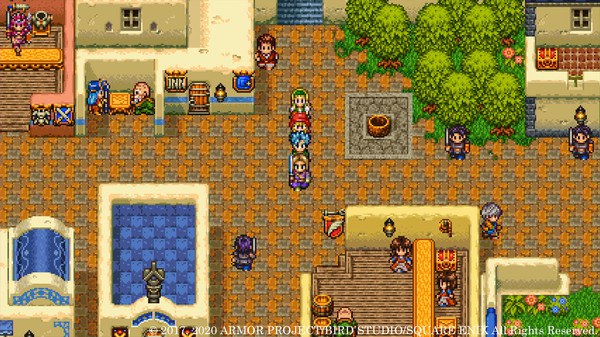
Dragon Quest XI S offers a choice between its HD presentation and a retro-inspired 16-bit mode. The current Square Enix store listing confirms that the Nintendo Switch 2 edition includes the ability to switch between 3D and 2D modes, while Nintendo’s game page describes 2D mode as a 16-bit RPG with pixel art and random encounters. These are two supported ways to experience the adventure, not a test of which kind of player you are. [2][1]
A useful first question is what you want your next play session to feel like. Choose 3D when you want to read the spaces between destinations as a continuous landscape and see the world presented with depth. Choose 2D when a compact pixel-art view and the rhythm of random encounters sound appealing. The choice can follow your mood or the kind of session you have time for; it does not need to become a permanent declaration about which mode is “correct.”
Let the encounter rhythm guide your choice
The mode descriptions point to a practical difference in how encounters arrive: Nintendo explicitly notes random encounters in 2D mode, while its overview describes approaching visible enemies in the overworld to begin a battle. If you prefer to see a monster and decide whether to approach it, the visible-world structure may suit that session. If you want the classic uncertainty of an encounter arriving as you travel, 2D mode offers that distinct rhythm. [1]
Try a simple comparison on a familiar stretch of road rather than switching during a complicated story moment. In one session, pay attention to how often you stop to engage enemies and whether that pace feels welcome. In another, notice whether a 2D stretch makes movement and battles feel brisker or more nostalgic for you. These are player-facing observations, not claims about which mode gives better rewards or faster progress; the cited official descriptions do not promise that one is more efficient.
Use the mode switch as a change of lens
The ability to move between modes can be treated like changing how you look at the same long adventure. The Square Enix listing establishes that mode switching is part of the edition, while Nintendo’s description identifies the different presentation and encounter style. That gives a practical reason to experiment: if the current view is no longer helping you enjoy a session, a different presentation may refresh your attention without requiring you to abandon the game. [2][1]
For example, you might prefer 3D while you are learning the shape of a new area, then choose 2D later when you want a more traditional, focused run through familiar territory. That is a suggested way to organize play, not a guaranteed gameplay advantage. Check the in-game prompt at a church or sacred statue when you want to change modes; Nintendo’s overview lists those locations as the points where the mode can be changed. [1]
Keep the experiment small and personal
A short trial gives a clearer answer than trying to judge both modes by memory. Pick one ordinary play session, decide what you want from it—visual exploration, a classic battle rhythm, or simply a change of pace—and then notice whether the selected mode supports that goal. If it does, stay with it. If not, switch when the game offers the opportunity and compare again.
The best choice may vary across the length of an RPG. A player can value the depth and visibility of 3D in one part of the journey and the compact, old-school feel of 2D in another. Dragon Quest XI S’s mode options make that preference adjustable. Rather than asking which mode represents the definitive way to play, ask which one makes the next hour of your own adventure more inviting.
Primary work & further reading
Primary work: Dragon Quest XI. Character and story readings are editorial interpretations. The publisher reference below identifies the work and its premise.