Campaigning in the Netherworld: Disgaea 4's political machinery
Disgaea 4 wraps its rebellion in the routines of government, giving the Cam-pain HQ and its assembled allies a tactical purpose. The campaign’s administrative comedy makes preparation feel like part of the struggle over who gets to rule.
Coverage: Covers the early rebellion premise, Cam-pain HQ, and arranging allies for battle; no later campaign outcomes.
A rebellion has to organize itself
Disgaea 4 frames its central conflict as a revolt against the Netherworld’s corrupt government. The trigger is personal: Valvatorez fails to keep a promise to the Prinnies he trains after a dark energy takes them away. But a grievance alone cannot topple a regime. The shift from Hades instructor to revolutionary therefore brings a second problem into view: how does a small group turn outrage into sustained action?
The game’s tactical structure gives that question a practical form. Battles require a player to assemble a force and make decisions about where its members belong. The rebellion’s fiction and the player’s planning meet in the same act of organization. Each fight is not only a clash with enemies; it is also a test of whether the cause can gather the people and resources needed to keep moving against a larger institution.
Cam-pain HQ makes administration part of the joke
The Cam-pain HQ gives the rebellion a headquarters whose language and routines evoke an election campaign. That choice makes political work tangible and ridiculous at once. A revolt that begins with a vampire instructor’s ethical outrage acquires an office-like center, where the group must organize itself and present a cause. The pun makes bureaucracy a source of comedy, but the headquarters also solves a story problem: a political movement needs somewhere for its scattered efforts to become coordinated.
This is a fitting parody for a setting in which demons take power seriously even when their institutions behave absurdly. The campaign frame draws attention to the labor between a declaration and a victory. There are preparations to make, allies to bring in, and choices to revisit. By making those tasks visible as the work of a campaign, the game treats administration as something that can be both tedious and consequential. A rebellion that cannot coordinate its members remains a complaint; a rebellion with a headquarters can begin to act like an alternative government.
Arranging allies turns preparation into judgment
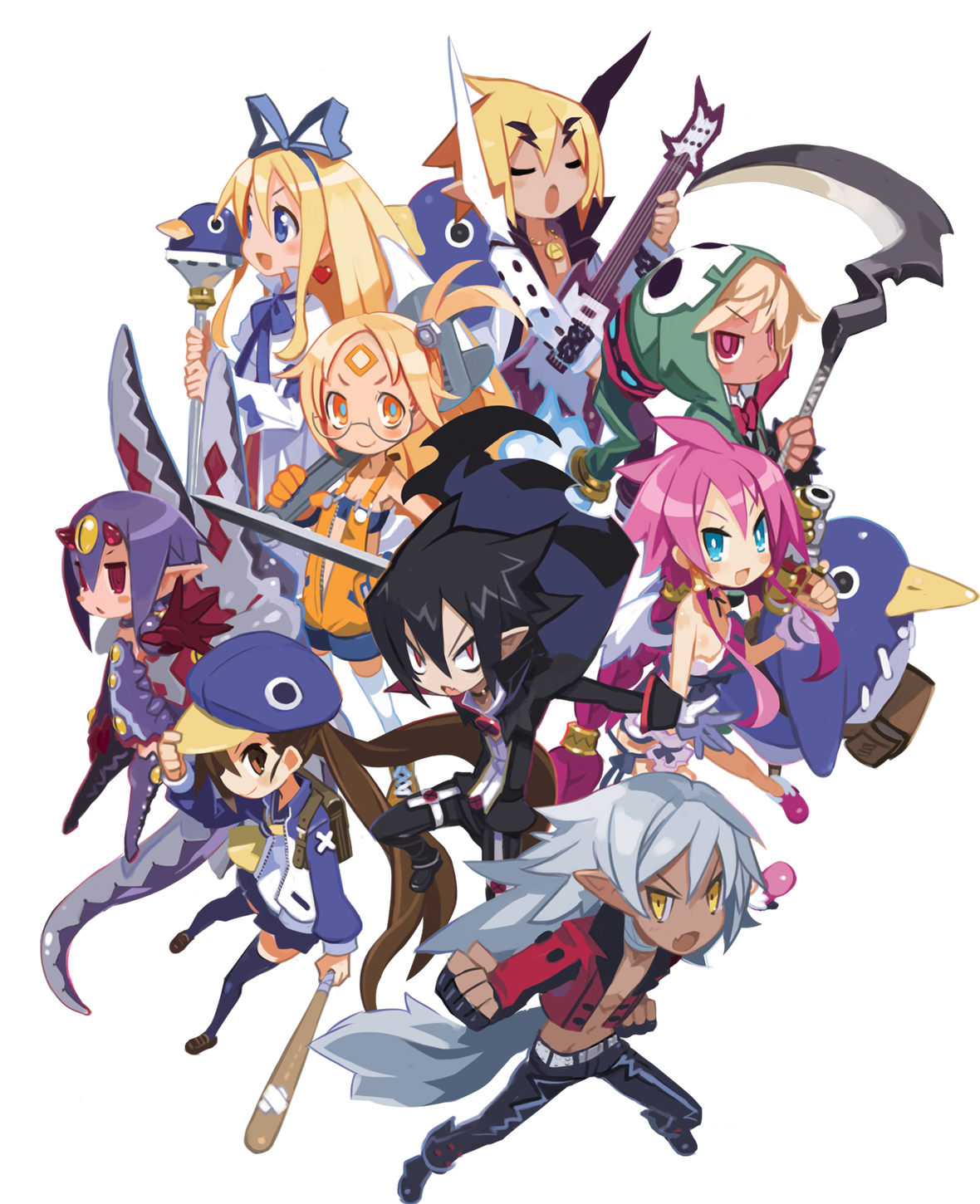
Party organization is one of the clearest places where the player participates in that alternative. Deciding which allies to bring and how to arrange them is a judgment about what this particular battle requires. A force is not a single undifferentiated mass. Characters occupy different roles, and the player has to consider how their abilities and positions can work together in the space available.
That decision gives preparation a political echo without making every tactical choice a direct allegory. The fictional rebellion depends on cooperation among characters with their own personalities and agendas; the player’s formation turns cooperation into a concrete problem. Who can stand near whom? Which member should take a position that supports another? The answers belong to the battle at hand, but the need to ask them reinforces the campaign’s larger premise: a collective cause has to be built through arrangements that let individual strengths contribute.
Repetition gives the campaign its civic texture
In a tactical role-playing game, players may return to battles and spend time developing their forces. Disgaea 4’s campaign framing gives that recurring preparation an institutional flavor. Growth can feel less like a detached pause from the revolt and more like the effort to keep a movement capable of acting. The world’s political language follows the player back into practical decisions about the next confrontation.
This does not make every routine task noble or every battle a referendum. The humor depends on the game’s willingness to let a grand revolutionary premise share space with the everyday work of managing a group. That scale is the point: political change requires more than a hero’s declaration, while tactical success depends on decisions too local to feel grand. Cam-pain HQ links those scales. It turns organization into a comic campaign ritual, then lets the battles show why the ritual matters. The revolution becomes playable because preparation, like government, is made from people placed in relation to one another.
Primary work & further reading
Primary work: Disgaea 4. Character and story readings are editorial interpretations. The publisher reference below identifies the work and its premise.