Death Note’s Naomi Misora turns investigation into a human limit
Naomi’s brief return to the investigation gives Death Note a counterpoint to Light’s confidence: careful reasoning can narrow the truth without making a person safe from it.

Coverage: Spoilers through Death Note, Vol. 2, including Naomi Misora’s role in the early investigation.
The case acquires a person who can read it
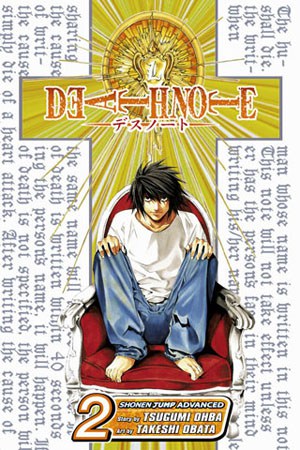
Death Note’s early contest can look like a duel between exceptional minds: Light uses the notebook to kill, while L works through the police investigation. Naomi Misora changes the scale of that contest. VIZ’s description of volume 2 identifies her as the fiancée of an FBI agent who has uncovered information that could lead to Light’s capture. That short description gives her a clear narrative function, but it also makes her more than a clue delivery system: she arrives with professional knowledge and a personal reason to continue asking questions. [1]
The contrast matters because Light’s confidence depends on treating other people as predictable parts of a scheme. Naomi is dangerous to him precisely because her thinking is not organized around his self-image. She follows evidence from a case and makes inferences from what she knows. The story briefly gives the reader a second way of seeing the same events: the spectacle of Kira’s power from outside, and the ordinary investigative work that could expose the person using it.
Reasoning is a form of resistance
Naomi’s expertise does not cancel grief; it gives grief a direction. The official volume summary connects her investigation to her fiancé’s death and says that she has found information that could bring Light closer to capture. The narrative therefore lets emotional loss sharpen attention rather than simply cloud it. Her questions matter because she is capable of examining the pattern, not because the story asks the reader to accept a miraculous intuition. [1]
That distinction creates a different kind of suspense from a supernatural rule. The notebook can make a death look inexplicable, but a sequence of events still leaves human traces: who was present, what was said, and what a witness knows. Naomi’s investigation suggests that careful reasoning can restore agency in a world where the killer appears to control the terms. The tension comes from seeing how much a person can infer while also knowing that the person doing the inferring is exposed.
Light’s performance has an audience
VIZ’s series summary introduces Light as a student who decides to use the notebook to rid the world of evil, then frames the central question around whether that power will turn him into what he opposes. Naomi’s presence gives that question a concrete social setting. Light is not only making private moral choices; he is performing a story about justice in a world where relatives, investigators, and officers have to decide what the evidence means. Her work makes the gap between his declared purpose and the consequences of his actions harder to keep abstract. [2]
This is why an investigator can challenge Light without matching his access to the notebook. She brings a different kind of power: a practiced way of connecting observations. The series’ premise places supernatural capability on one side and human investigation on the other, but Naomi complicates any easy assumption that the supernatural side automatically controls the plot. Even a limited piece of information can force a powerful person to adapt, and adaptation reveals the anxiety beneath apparent control.
A narrow window makes the character memorable
Naomi’s portion of the story is brief, which can make her feel like a device for raising the stakes. Yet that briefness is also part of the effect. The investigation opens a possible route toward the truth, and the reader can see why the route matters before knowing whether the story will let it remain open. VIZ’s volume 2 description carefully presents both sides of that suspense: she has uncovered information that could lead to Light’s capture, while Light believes he has resolved the threat posed by the FBI. [1]
The resulting imbalance is uncomfortable by design. Naomi does not enter with the protection of being the protagonist, nor does the plot promise that good reasoning is rewarded safely. Her presence makes the investigation feel consequential because it has a human cost. The question is not only whether the detectives can outthink Light; it is whether a person can act on a sound inference when the opponent can manipulate the conditions around her.
The counterpoint to a notebook
The notebook is a tool that appears to reduce people to names and outcomes. Naomi’s investigation moves in the opposite direction: it requires attention to particular people, relationships, and the sequence of choices that created a case. That is an interpretive reading of the early volumes, grounded in the publisher’s description of her role and of Light’s stated aim. It does not make her a simple moral opposite to him; instead, it shows that the same story can be approached as a puzzle or as a set of lives affected by the puzzle. [1] [2]
Naomi matters because she briefly makes the second approach impossible to ignore. Her intelligence gives the investigation a credible human counterweight, while her vulnerability prevents the story from turning competence into a guarantee of safety. In a series fascinated by control, she reminds us that knowing more can be both an act of resistance and a reason the powerful will try to silence you.
Primary work & further reading
Primary work: Death Note. Character and story readings are editorial interpretations. The publisher reference below identifies the work and its premise.