What Ryuk finds entertaining
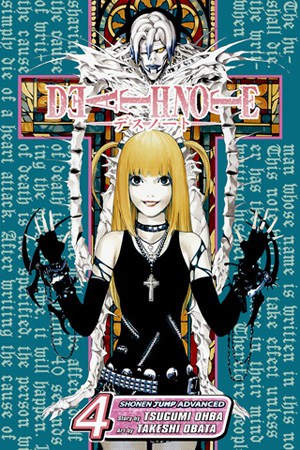
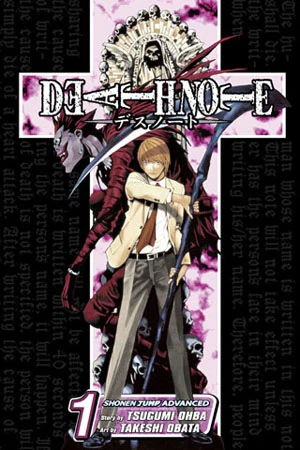
Ryuk brings the supernatural into Light’s ordinary room with an unsettling lack of ceremony. His boredom, appetite for apples and refusal to advise make the notebook feel less like a moral test administered from above than a power left in human hands.
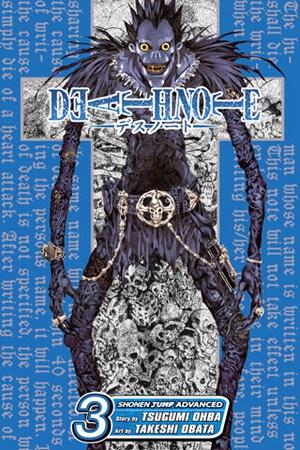
Coverage: Covers Ryuk’s introduction and early interactions with Light; no ending events are discussed.
A visitor without a mission
Many stories introduce a supernatural power through a guide who explains its rules and steers the protagonist toward a lesson. Ryuk initially frustrates that expectation. He appears in Light’s life because the notebook has been dropped into the human world, but he does not arrive with a program for how Light ought to use it. His presence is strange and consequential, yet his manner suggests that the human drama is not a sacred task to him. That lack of purpose makes the premise colder: nobody in the room is assigned to keep Light morally grounded.
Ryuk’s boredom gives the transfer of power an accidental quality. The notebook is not framed as a prize awarded to the most worthy person, or as a trap devised to expose a particular flaw. It is an object that has crossed a boundary because its owner wanted something to happen. Light may build a sweeping justification around it, but Ryuk does not confirm that justification as destiny. The distance between Light’s ambition and Ryuk’s casualness leaves the young man alone with the meaning of his choices.
The apple as a comic intrusion
Ryuk’s taste for apples gives the early scenes a deliberately awkward texture. Light has stumbled into a crisis that bears directly on life and death, while the Shinigami can interrupt the atmosphere with a mundane appetite. The contrast can be funny, but the humor does not soften the power in the notebook. Instead, it makes the supernatural feel less ceremonious. A death god who wants fruit is not behaving like a solemn judge entering a courtroom; he is an odd presence in a room where a human being is trying to decide what he has become.
That appetite also gives Ryuk a visible preference without supplying a moral position. He can want something from the human world, but wanting does not amount to caring about the consequences of Light’s actions. The distinction keeps his characterization from turning into a simple symbol. He is neither a disembodied voice of conscience nor an all-knowing narrator who tells the reader what to think. His small, comic needs make him legible as a character while his indifference makes him unsettling.
Refusing the job of conscience
Ryuk’s refusal to function as Light’s ethical guide is one of the sharpest choices in his early characterization. He can explain aspects of the notebook and react to Light’s behavior, but he does not take responsibility for deciding what justice should mean. That leaves a tempting gap for Light to fill. The protagonist can tell himself that the supernatural being beside him has accepted the situation, but Ryuk’s presence is not approval. He watches; Light chooses.
This arrangement exposes how much Light wants the power to come with an external confirmation. Ryuk’s status might make his judgment seem more authoritative than a human observer’s, yet his detachment denies Light that shortcut. There is no divine voice in the room to pronounce the killings necessary. The absence forces the reader to measure Light’s reasoning on its own terms: his language of justice can sound absolute, but it comes from a person who has made himself judge.
An audience that sharpens responsibility
Ryuk’s role as observer adds pressure without turning him into an active opponent. He is physically present for Light’s transformation, and that presence gives the opening an audience. But an audience is not the same as a guide or a rescuer. Ryuk does not interrupt the practical routines of Light’s life to impose limits; he remains available to watch the human consequences unfold. The arrangement makes the scenes intimate and uncomfortable: Light cannot pretend the notebook is merely a private fantasy, because the being who brought it into his world is standing nearby.
That spectatorship places more weight on human responsibility. If Ryuk were a tempter pushing Light toward violence, Light could blame his influence; if he were a judge, Light could seek his verdict. Instead, Ryuk’s boredom and appetite sit beside the enormous consequence of the notebook without resolving it. The contrast is the point. Death Note’s premise grows colder because supernatural power arrives without supernatural guidance, leaving every claim of justice attached to the person who writes the name.
Primary work & further reading
Primary work: Death Note. Character and story readings are editorial interpretations. The publisher reference below identifies the work and its premise.