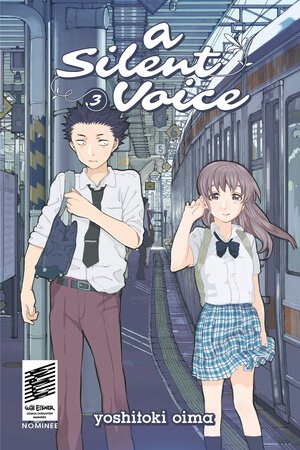
Shoya's apology has to become more than a sentence
Shoya’s return to Shoko begins with a notebook and a carefully rehearsed phrase. The manga asks what an apology can mean when the person offering it must learn to listen, accept uncertainty, and change how he meets others.
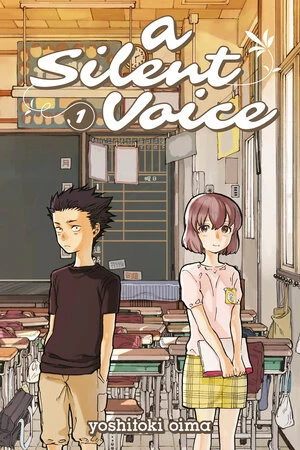
Coverage: Covers the opening setup and Shoya’s initial attempts to reconnect with Shoko; no suicide scene details or ending.
A phrase cannot settle the past
When Shoya approaches Shoko again, he carries a phrase he has practiced: “friend.” The word is simple enough to fit in the notebook through which they communicate, but its simplicity is part of the problem. Shoya wants a clear beginning, perhaps even a small sign that the years between them can be crossed. Yet the word does not explain what he did, what Shoko experienced, or what she might want now. The manga lets the awkwardness of this first contact remain visible instead of treating the phrase as a key that opens everything.
That gap matters because Shoya’s earlier cruelty was not a single remark that could be answered with one better sentence. His bullying helped turn Shoko’s difference into a public target, while the adults and classmates around them failed to stop the harm in time. Returning with an apology cannot make those circumstances disappear. The phrase shows a desire to approach; it does not establish that Shoko must accept the approach, forgive him, or help him feel better about himself. The scene’s modesty puts those distinctions at the center of the reunion.
Responsibility begins with the person harmed
Shoya’s effort is meaningful partly because he does not ask the manga to make his discomfort the measure of the damage. He has spent time isolated and burdened by the memory of his actions, but remorse is not yet repair. The story’s focus on his return to Shoko makes responsibility relational: he has to face the person he hurt, rather than treating guilt as a private punishment that automatically balances the account. His feelings may motivate him to act, but they cannot tell him what his action means to her.
The notebook sharpens this point. It gives Shoya a practical way to communicate, but the object cannot guarantee that he has understood Shoko. He must still attend to what she writes and how she responds, rather than assuming that his own intention supplies the missing meaning. This changes the role of an apology. It is not a declaration that the apologizer has reached the right emotional state; it is an opening to a conversation whose terms belong to both people. The manga makes that opening tentative, which is more honest than presenting a polished speech as proof of growth.
Uncertainty is part of the encounter
The first meetings do not offer Shoya a dependable script. He can choose to speak, bring the notebook, and make an effort to connect, but he cannot choose Shoko’s reaction. That uncertainty keeps the reunion from becoming a simple test in which Shoya says the correct thing and receives a reward. His desire for friendship risks becoming self-centered if he treats it as an outcome he is owed for trying. The story instead lets the desire sit beside the possibility that Shoko may have her own reasons, pace, and expectations.
This is also where the manga’s attention to ordinary interaction carries weight. The encounters are not staged as a grand public confession that settles everyone’s judgment at once. They are small, exposed attempts to share space after harm. That scale prevents responsibility from becoming spectacle. Shoya’s conduct matters in the details of how he approaches, waits, and responds; a dramatic declaration could not do that work for him. The unease of the scenes is therefore not an obstacle the story must quickly remove. It is evidence that neither person can control what this contact will become.
Change has to outlast the apology
The opening of A Silent Voice presents Shoya’s apology as a beginning that needs habits behind it. If the word “friend” is to mean more than a wish, he must keep making room for Shoko’s communication and for reactions he cannot predict. He also has to resist turning his renewed effort into a story about his own redemption. The person who caused harm does not get to define repair simply by announcing that he has changed; the effects of his choices, and the person affected by them, remain part of the meaning.
That is why the first phrase matters without being enough. It gives Shoya a way to cross the immediate silence, while the manga refuses to mistake contact for resolution. Responsibility grows through attention, patience, and willingness to be corrected, not through the sentence alone. The scene’s emotional force lies in that unfinished quality: Shoya has taken a step toward Shoko, but he still has to learn how to make the step serve a relationship rather than his need for a clean slate.
Primary work & further reading
Primary work: A Silent Voice. Character and story readings are editorial interpretations. The publisher reference below identifies the work and its premise.