Tales of Vesperia: free run to make space before committing
A practical Tales of Vesperia guide to using free run as a deliberate repositioning choice: check the target, create room to defend or approach, then commit to an arte when its timing and direction make sense.
Coverage: Spoiler-light; discusses combat controls and planning, without story outcomes.
Use movement to answer a specific problem
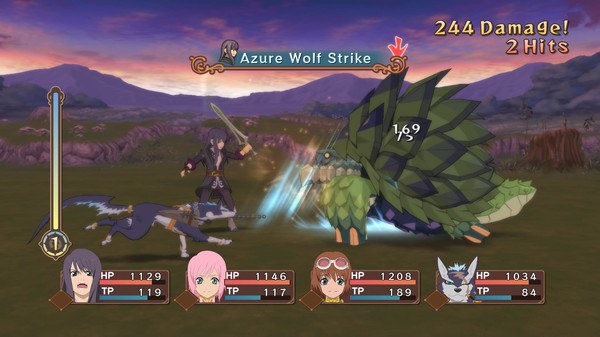
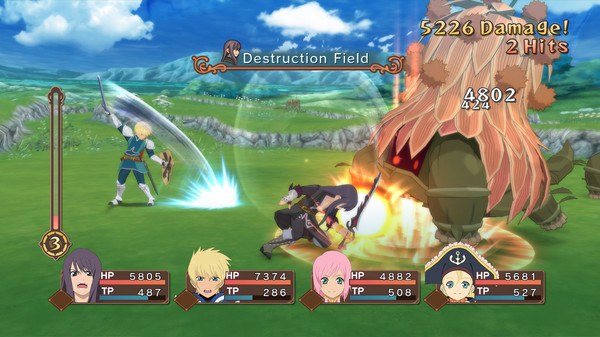
Tales of Vesperia’s combat is real-time: Bandai Namco describes a specialized Linear Motion Battle System in which the player controls one party member while the rest of the party follows AI commands. The manual gives the controlled character a guard button, a regular attack, arte inputs, target controls, and free run. These are separate tools; free run is most useful when movement solves a problem that an attack cannot. [1] [2]
Start by naming the problem. Are you too close to an enemy’s approach? Is the current target no longer the one you need to pressure? Are you trying to move into a better lane before using an arte? A short reposition gives you time to answer those questions. Moving without a purpose can leave the character exposed or waste an opening, so treat the movement as part of the plan rather than a pause between attacks.
Check the target before changing your line
The manual lists target display and target selection among the battle controls, and notes that some controls unlock as the game progresses. That means the first step is to learn which commands are available in your current stage of progression, then use the target display to confirm what your next action is aimed at. The screen may be busy; a visible target choice helps turn movement into an intentional approach. [2]
A practical sequence is: confirm the opponent you mean to pressure, hold the free-run control to move, release it once your position is useful, and then choose a regular attack or arte. This small order prevents a common planning mistake: moving toward one opponent and then committing an action while the target cursor still points somewhere else. The goal is not to circle the arena, but to make the next command easier to place.
Create a defensive beat when the approach is unsafe
Guard and free run answer different questions. Guard is the direct defensive input in the manual; free run changes where your character is standing. If an opponent is already close and you do not have a safe route past it, guarding may be the more straightforward response. If you have a clear path to create distance or line up an approach, a brief free run can reset the spacing before you attack. [2]
For example, when an enemy is facing your character and another foe is nearby, resist the urge to press the attack button just because an arte is ready. First check whether the route is open. If it is, use a small movement to separate the threats or approach from a more useful angle. If it is not, defend and wait for a clearer opening. This is a decision exercise based on the game’s documented controls, not a promise that movement alone will interrupt an enemy action.
Turn the opening into a measured attack
Once your position and target agree, choose a command with a clear purpose. The manual maps a regular attack and arte input separately, and also lists Over Limit and Fatal Strike controls. Treat those stronger or more specialized options as follow-through when the current situation warrants them; the manual does not say that any one command is always superior. Keep your next action connected to the space you created. [2]
A useful practice drill is to enter an ordinary encounter and repeat the same three questions: who is my target, where is the safest useful place to stand, and which command am I trying to land after I move? Change only one answer at a time. If your movement made the attack easier to aim, keep that route. If it exposed you without improving the target or timing, shorten it. The publisher frames Vesperia as real-time party combat, while the manual provides the controls; your own repeatable rule can connect those facts into a calmer approach. [1]
Primary work & further reading
Primary work: Tales of Vesperia: Definitive Edition. Character and story readings are editorial interpretations. The publisher reference below identifies the work and its premise.