Vesperia's combat asks you to build a sequence
In Tales of Vesperia: Definitive Edition, Yuri’s attacks, TP-funded artes, and movement all shape the next opening. Learn how to build a short sequence, recognize when to stop, and reposition with Free Run when an enemy blocks or shifts away.
Coverage: Core Linear Motion Battle System concepts available early in the game; no late-game mechanics or feature prerequisites.
Start with contact, then choose an arte
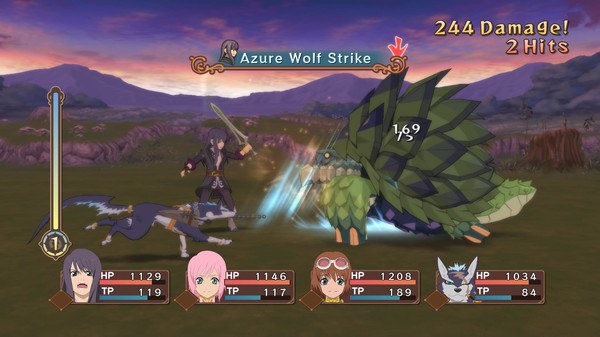
Vesperia: Definitive Edition uses real-time movement inside battle. You control one character while AI allies act alongside you, so Yuri’s next move depends on both the enemy’s position and the space your party is creating. Begin close enough for normal attacks to connect. Those strikes can lead into base artes, and the basic progression can continue from base artes into arcane artes as Yuri’s skills and later unlocks make more routes available. Think of the tiers as a structure for building an exchange, not a promise that every hit will connect.
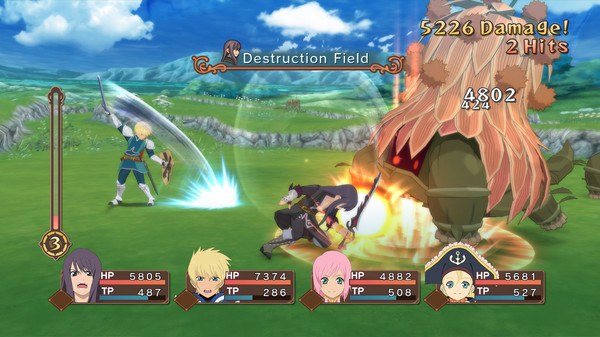
Azure Edge is one of Yuri’s real artes, useful when you want an attack with a different reach and shape from a close normal strike. It still costs TP, the resource that funds artes, so choose it with the current opening in mind. If the enemy is already in range and pressured, spending TP to extend that moment may be worthwhile. If the target has moved or is guarding, a long commitment can spend TP without securing the follow-up. Watch where the enemy is as you select an arte, then decide whether continuing the sequence makes sense.
Treat TP as a limit on commitment
TP is not just a meter to empty whenever Yuri has an opening. A string of normal attacks and artes can keep him occupied long enough that a miss, a block, or a target shifting out of reach leaves him exposed. Base and arcane artes give the sequence more possibilities, but they also make it tempting to keep pressing through a closing opportunity. Shorten the string when the enemy’s posture or position says the opening is gone; saving TP for a later, clearer chance is a useful choice.
Skills and later unlocks change which routes Yuri can use, so his available sequence grows as you progress. That does not mean you need to memorize an elaborate route before you can fight effectively. Use the options currently available and notice what each one asks of the situation: close range, a vulnerable target, or enough time to recover if the attack fails. A brief sequence that connects and leaves Yuri ready to move can serve you better than a longer chain that spends TP and strands him in front of a blocking enemy.
Use Free Run to change the angle
Free Run changes Yuri’s positioning on the battlefield. It helps you move around an enemy, close distance, or get out of a line of pressure, but it does not block an incoming attack automatically. Keep the distinction clear: movement can improve where you stand, while avoiding a hit still requires you to read what the enemy is doing. If an opponent turns to face Yuri or begins an attack, Free Run can help you shift away or approach from another angle; it is not a substitute for watching the attack itself.
Positioning matters before and after an arte. If Yuri starts an attack from too far away, the enemy can leave its reach before the strike arrives. If he keeps attacking after the target has shifted, he can lose both his opening and his safe position. Move into a range where a normal strike can make contact, use the opening to choose a base arte or an available continuation, and stop when the enemy’s response calls for a reset. AI allies may keep other enemies busy, but still check the field before Yuri commits to a long string.
A blocking foe calls for a different choice
Imagine a hypothetical exchange with a foe that is holding its guard. Yuri approaches and tests the situation with a normal attack. If the foe blocks, continuing straight into a longer arte string risks spending TP against that guard while Yuri remains in place. That choice favors immediate pressure but trades away TP and may leave him exposed if the foe responds. Instead, you could use Free Run to change position, watch how the foe turns, and wait for a new opening before starting another short sequence. The movement changes the approach; it does not break the guard by itself.
When the foe finally stops guarding or commits to an attack, respond to the position and timing you actually see. If Yuri is close and the opening is clear, a normal attack into a base arte can start a controlled exchange; an available arcane arte can extend it when the route and opening support that commitment. If the enemy backs away, stop spending TP on attacks that no longer reach and reposition. This is the practical rhythm of Vesperia’s battle system: build from normal attacks through arte tiers when the opening holds, and use movement or restraint when it does not.
Primary work & further reading
Primary work: Tales of Vesperia. Character and story readings are editorial interpretations. The publisher reference below identifies the work and its premise.