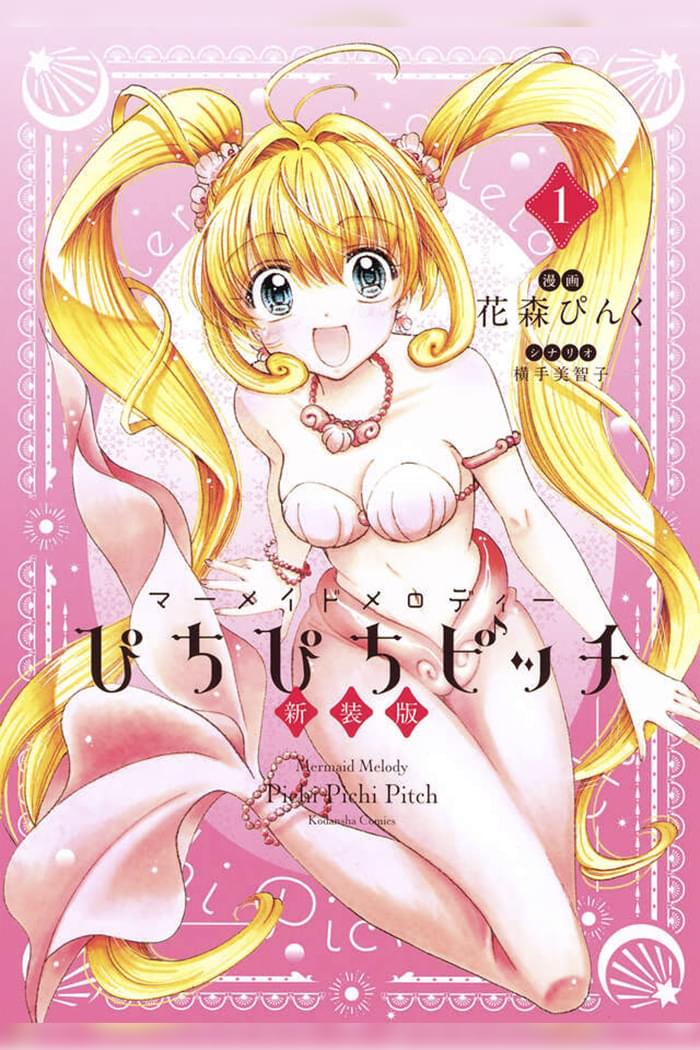
Between princess duties and life at Pearl Piari
The seaside inn gives Lucia’s princess story an everyday address. At Pearl Piari, the demands of the mermaid world can sit beside human routines, making fantasy feel like somewhere to return to rather than a distant kingdom.

Coverage: Covers Pearl Piari as the early anime’s seaside base for Lucia and its role in balancing mermaid duties with ordinary routines; no late reveals.
A base changes the scale of fantasy
Mermaid Melody begins from a broad fantasy premise: a mermaid princess enters the human world, seeks the boy she once rescued and faces threats to the oceans. Pearl Piari gives that premise a smaller, repeatable scale. A seaside inn is a place of arrival and return, with the practical associations of shelter, rooms and daily activity. It lets the series place a princess in a recognizably human setting without making her responsibility to the sea disappear.
That combination is important to the story’s rhythm. If every scene required a journey to an extraordinary location, Lucia’s human life could feel like a temporary disguise between adventures. An inn provides continuity. Characters can come back to a familiar setting, and viewers can register the contrast between the extraordinary identity Lucia carries and the ordinary shape of a day. The fantasy becomes domestic because it has a home-like point of reference.
The coast keeps two worlds in view
Pearl Piari’s seaside setting connects the inn to the ocean that defines Lucia’s origins. The sea is not merely distant scenery or a symbol reserved for moments of danger; it is part of the environment around the human-world base. That proximity makes the two sides of Lucia’s existence feel physically adjacent. She can inhabit an ordinary place while remaining within sight, in a broader sense, of the world whose fate concerns her.
This setting also gives the premise a useful visual tension. An inn suggests contained routines, while the ocean implies depth, movement and scale beyond the shore. The series can move between those impressions without treating them as separate genres. Lucia’s life in the human world is not an escape from mermaid duties; it is where those duties and her ordinary encounters begin to overlap. The coast lets that overlap feel natural rather than explained at length.
Daily routines make princess duties tangible
The appeal of a recurring base lies in what it allows the story to place next to its grand obligations. Princess duties can sound abstract when described only in terms of kingdoms and threats. An everyday setting gives those obligations a human measure: they interrupt or accompany the kinds of routine that make a place familiar. Lucia’s identity matters not just at the scale of the ocean, but in the life she is trying to build on land.
That contrast makes Pearl Piari more than a decorative backdrop. Familiar surroundings give emotional weight to any return, because a repeated place gathers associations as the story revisits it. The audience learns to see Lucia not only as a magical figure who appears when danger calls, but as someone whose responsibilities persist between dramatic moments. Domestic space does not diminish the fantasy. It shows what the fantasy asks its characters to carry into ordinary time.
A home-like setting keeps the premise human
Pearl Piari helps the series balance two kinds of attention. The mermaid story needs room for princesses, songs and threats to the sea; Lucia’s human-world story needs room for small encounters and the effort to belong. A seaside inn can hold both because it is specific without being grand. Its scale invites the viewer to notice the character living there, not just the spectacular identity she brings with her.
That is the setting’s quiet narrative work. It gives Lucia a point of return while keeping the ocean close enough to matter, so her adventures do not detach from her daily life. The inn makes the fantasy feel inhabitable: the magical world has an address, and the human world can become part of the same routine. By grounding princess duties in a recurring, ordinary place, Mermaid Melody makes its central split feel less like a costume change and more like a life being lived.
Primary work & further reading
Primary work: Mermaid Melody. Character and story readings are editorial interpretations. The publisher reference below identifies the work and its premise.