Equivalent exchange is a promise the story keeps testing
Equivalent exchange gives alchemy an intelligible rule, but the Elric brothers’ failed attempt to bring their mother back exposes the distance between a principle and a promise. The early manga asks what a rule can explain, and what it cannot give.
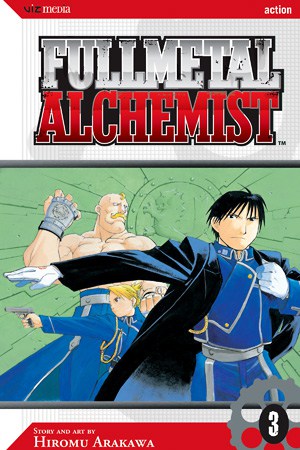
Coverage: Covers the early manga’s alchemy premise and the brothers’ failed human transmutation; no later moral resolution.
A rule gives ambition a shape
Equivalent exchange makes alchemy feel comprehensible. Change is possible, but it carries a cost: a person cannot simply declare a wish and expect the world to supply it freely. For the Elric brothers, the principle gives study and experimentation a structure. It suggests that the natural world can be understood through rules, and that disciplined knowledge can act on it. Such a rule is appealing because it makes even a difficult ambition seem subject to reason.
But a rule that explains exchange is not automatically a promise that every desired result is available. The brothers’ longing to bring their mother back gives the principle its emotional test. Their effort is not an abstract exercise in technique; it is an attempt to make grief answerable to knowledge. The difference matters. A system can tell its students how to attempt a transformation without guaranteeing that the transformation is possible, or that the price will be bearable.
Human transmutation turns theory into a boundary
The brothers’ failed human transmutation marks the distance between knowing a principle and having power over its consequences. The manga treats their attempt as a transgression born of love and confidence, not as proof that their feelings were false. They want to reverse a loss that ordinary time has made permanent. Alchemy offers a method shaped by rules, and the boys believe their knowledge can reach the result they need. Their failure makes that confidence costly.
The scene’s force comes partly from how little comfort intention can provide. The brothers do not approach the act as villains, yet a good motive does not make the experiment safe or successful. Their mistake is not simply that they have broken a rule; it is that they have treated a human life as something the rule might return if they supplied the correct effort. Alchemy’s limits become personal before they become philosophical. The cost is attached to the people who acted, not an anonymous equation.
The rule cannot measure every kind of loss
Equivalent exchange offers a language for cost, but emotional loss does not behave like a neat transaction. The brothers can understand that their experiment has consequences without being able to regard those consequences as a fair price for what they hoped to gain. The word “exchange” can sound orderly; grief is not. The story places those ideas beside each other to expose the strain between a conceptual balance and the experience of living with what cannot be restored by calculation.
That strain also prevents the principle from functioning as a simple moral verdict. If every outcome could be explained as the correct result of an equal payment, suffering would become easy to justify after the fact. The early manga resists that comfort. The brothers’ pain is not evidence that the world has delivered a satisfying lesson. Instead, the rule remains a tool for understanding alchemy, while the human meaning of its consequences stays open and difficult.
A promise becomes a question of responsibility
After the failed attempt, equivalent exchange can no longer be only an elegant idea the brothers have learned. It becomes bound to their choices and to the responsibility they carry toward each other. Their shared pursuit reflects a desire to answer for what happened, while also trying to find a way forward. That response does not erase their grief or settle what the principle means in every circumstance. It shows that a rule’s significance grows through the decisions people make under it.
The early story therefore treats equivalent exchange as a promise under pressure: a useful account of how alchemy works, but not a guarantee that the world will provide the outcome someone deserves or desires. The brothers’ experience makes the gap impossible to ignore. Knowledge can guide action, and action can demand a price, yet neither fact makes loss just. What the rule leaves unresolved becomes part of the story’s ethical ground: the cost of seeking change must be faced by the people who choose to seek it.
Primary work & further reading
Primary work: Fullmetal Alchemist. Character and story readings are editorial interpretations. The publisher reference below identifies the work and its premise.