Fullmetal Alchemist: equivalent exchange cannot measure human cost
An analysis of how Fullmetal Alchemist turns alchemy’s promise of exchange into an ethical problem: a price can be counted, but the series keeps asking who gets to decide what was worth paying.
Coverage: Spoilers: discusses the central premise and early-series setup, without later plot outcomes.
A rule that sounds fair
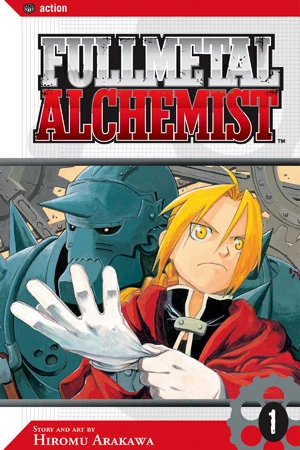
Fullmetal Alchemist begins with a neat proposition: alchemy alters the natural world, and the Elric brothers suffer a bodily cost after trying to use it to fulfill a wish. VIZ’s volume-one description presents that origin alongside Edward’s work as a government agent and a world where alchemy has been abused. The setup makes equivalent exchange sound like a law of nature: transformation is possible, but nothing comes from nothing. [1]
That clarity is compelling because it gives grief a vocabulary. The brothers’ loss can be connected to a choice, and a choice can be examined. But the rule invites a dangerous inference: if every outcome has a price, perhaps suffering can be balanced like an account. The story’s moral pressure comes from refusing to let the language of balance settle the question.
Cost and consent are different questions
A cost can be real without being fair. The brothers chose an act and paid for it, but the same world contains people subjected to institutions and violence. The official synopsis places Edward’s extraordinary ability inside a chain of government authority, where he is ordered to kill. [1]
That framing makes “equivalent” a troubling word. A rule might describe what an action demands, but it cannot tell us whether the person paying agreed, understood, or had another option. The exchange metaphor can explain consequence; it is inadequate as a complete theory of justice. A transaction can balance on paper and still be coercive in life.
Alchemy makes responsibility visible
The series ties knowledge to accountability. Alchemy is not an abstract power detached from the world: it changes bodies, objects and political conditions. VIZ’s catalog presents the work across its collected volumes, while its first-volume description links the brothers’ experiment to personal injury and a society damaged by misuse. [2]
A technical solution cannot automatically repair a moral problem. A character may learn a method or discover a resource, yet still need to ask who is affected. The practical logic of alchemy encourages planning: know what you want to change and what the change requires. The ethical logic adds another check: who bears that requirement, and who benefits?
Why the rule stays incomplete
If equivalent exchange worked as a full moral calculator, a sufficient payment could make any act acceptable. The premise makes that conclusion difficult to accept. The brothers’ loss is not harmless because it has an identifiable cause, and abuse is not absolved because someone can name its mechanism. Understanding a price is only the beginning of judgment.
The exchange language does two jobs. It creates a comprehensible structure for fantasy problem-solving, and it exposes the limits of treating human lives as quantities. The first makes the world feel coherent. The second keeps coherence from becoming permission.
A useful way to reread the premise
On a reread, watch for the difference between “this action has consequences” and “these consequences make the action fair.” The first is causality; the second is a judgment about people. Fullmetal Alchemist lets its characters reason through materials and methods, but its emotional questions resist being reduced to a successful calculation.
That tension gives the premise its staying power. Equivalent exchange can describe a boundary around power, but it cannot replace empathy, consent or accountability. The rule says transformation asks something of the world. The story asks readers to notice that the world is made of people, who cannot be made whole by arithmetic alone.
Primary work & further reading
Primary work: Fullmetal Alchemist. Character and story readings are editorial interpretations. The publisher reference below identifies the work and its premise.