A ten-year adventure can be a beginning instead of an ending
The anime opens after the legendary quest has already concluded, then makes its aftermath the beginning of a more personal journey. That reversed emphasis lets memory turn a finished adventure into a question about how people spend their time together.
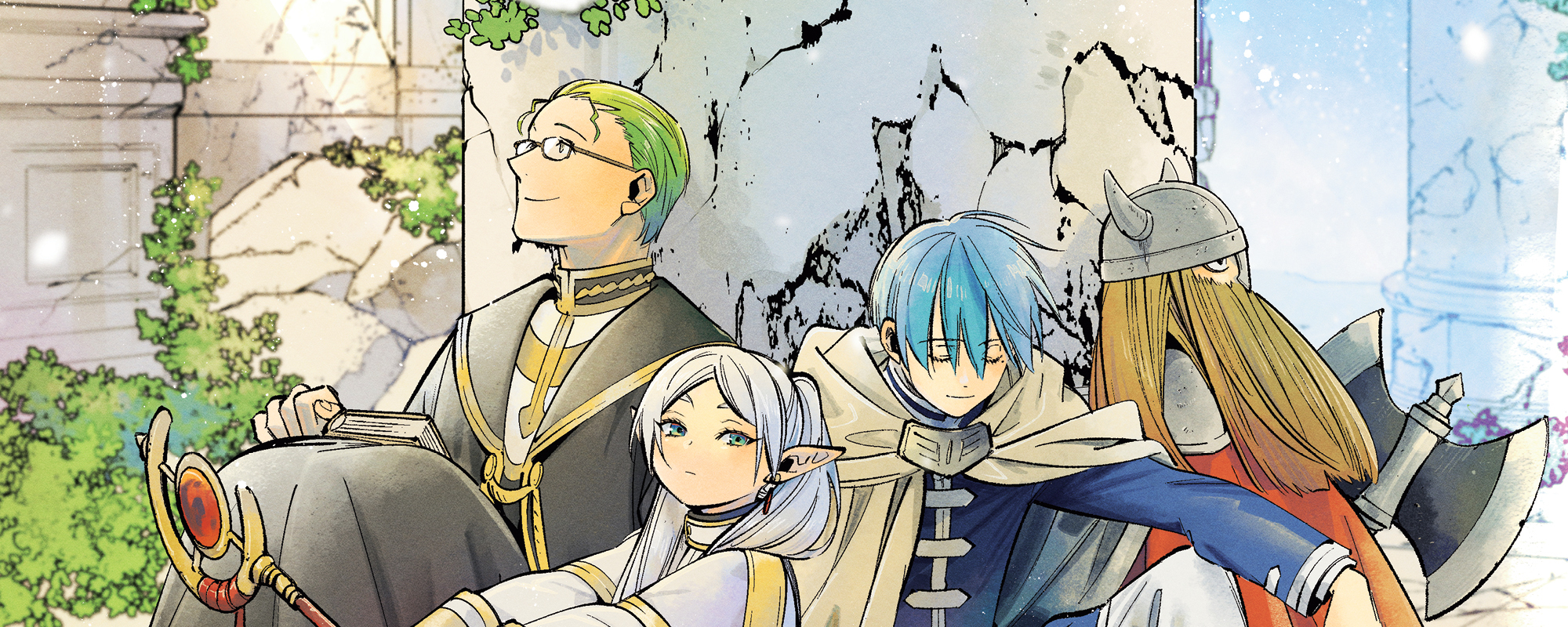
Coverage: Covers the anime’s opening temporal structure, the funeral, early memories of the party, and the renewed journey north.
Starting where adventure usually stops
Many fantasy journeys build toward a final victory and treat what follows as a brief reward. Frieren begins from the other side of that convention. The hero’s party has already defeated the Demon King and completed its ten-year adventure; the anime’s opening interest lies in what that ending means to people who experience time differently. The quest’s conclusion is not withheld as a mystery to solve. It is the condition that makes the story possible: the companions can now see what their shared years meant once they are no longer moving toward a common objective.
That choice changes the emotional weight of the opening. A victory can be remembered as a single landmark, but a decade of travel is made of countless ordinary encounters that may not have seemed important at the time. By beginning after the achievement, the series has room to ask what remains when the reason for staying together has disappeared. The adventure is complete in public terms; in private terms, the companions are only beginning to understand one another.
Memory rearranges the journey
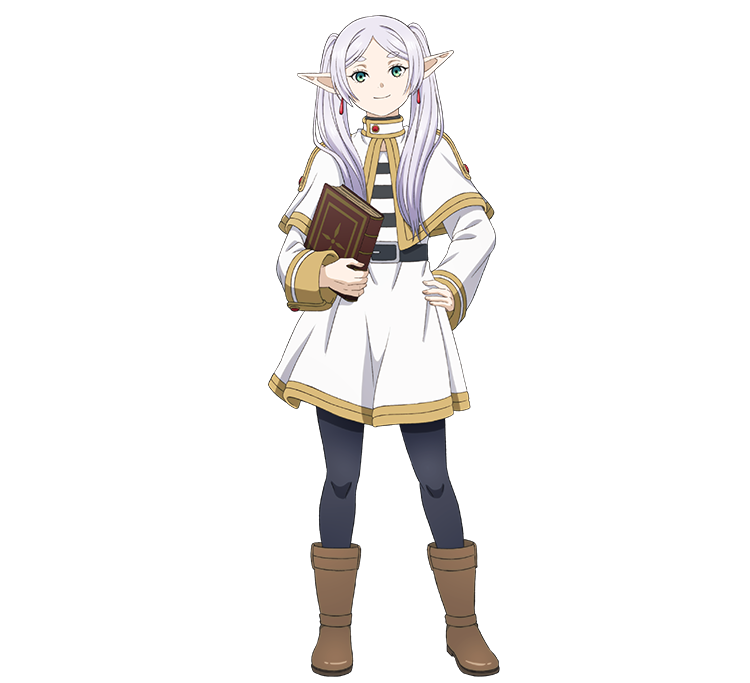
Time gives the opening its quiet reversal. The members of the old party reunite after a long interval, and what once felt like a continuing fellowship is now already becoming memory. For Frieren, those years seemed small beside the life ahead of her. For her human companions, the same stretch of time occupied a far larger share of what they could expect. The difference is not simply a contrast in ages. It changes what a missed conversation or postponed visit can mean.
The anime uses recollection to make that difference felt without turning the past into a complete chronicle. A returned detail can matter because it was overlooked when it first happened. The audience sees a shared moment acquire new meaning when Frieren understands that it belonged to a finite life. Memory does not give her a way back into the old adventure; it gives her a way to perceive what she was inside. In that sense, the series makes remembering an action in the present, one that alters how the past is valued rather than merely replaying it.
A funeral redirects the story
Himmel’s funeral concentrates this temporal idea into a personal shock. Frieren is not mourning a companion because the quest has failed or because she has been denied a heroic ending. She is confronted with the fact that a person she traveled beside remains partly unknown to her. The distinction matters: the loss exposes a gap in attention, not a failure of bravery. The old adventure brought Frieren and Himmel together, but their shared purpose did not guarantee that she had understood his daily acts or the feelings behind them.
From this gap comes the motive for a different kind of journey. The anime’s movement north takes shape in the wake of the completed quest, as Frieren sets out with a renewed interest in people and in the life she once treated as a short episode. The new journey does not erase the first one. It changes the question attached to travel: instead of asking what must be defeated, Frieren must learn what it means to accompany someone while time is passing.
The road continues by another measure
The temporal inversion gives the story a clear argument about endings. A goal can be reached without the people who pursued it having finished learning from one another. That idea does not diminish the first adventure or its victory. It asks the audience to distinguish between completing a task and understanding the relationships formed along the way. Frieren’s later attention grows out of the distance between those two achievements.
By opening after the grand quest, the anime makes its northward road feel less like a second chance to repeat an old triumph and more like an attempt to live differently with what remains. Memory is not a substitute for companionship, and regret cannot restore the dead. But both can change the conduct of the living. The ten-year adventure ends as a public story of victory; it begins, in retrospect, as the first chapter of Frieren’s unfinished education in time, remembrance, and presence.
Primary work & further reading
Primary work: Frieren: Beyond Journey's End. Character and story readings are editorial interpretations. The publisher reference below identifies the work and its premise.