Luna Nova's old rules give Little Witch Academia something to argue with
Luna Nova’s traditions give Akko a world to push against, but they also make her ambitions legible. The school’s reputation, routines, and expectations turn her entertainment-inspired vision of magic into a debate about what a witch’s education should value.
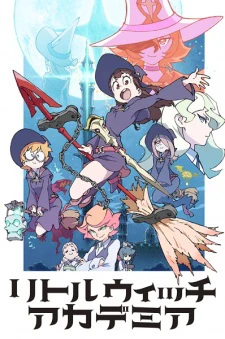
Coverage: Covers Luna Nova and Akko’s early experiences in the 2017 TV series; no late villain revelations or resolutions of magical history.
A school with a public image
Luna Nova arrives with the weight of a recognized institution. It is a school for witches, but it is also a place with a reputation and a cultivated sense of what proper magical education looks like. Its traditions give students a framework: lessons have an established shape, expectations precede any particular pupil, and success appears to mean learning how to operate within the school’s inherited culture.
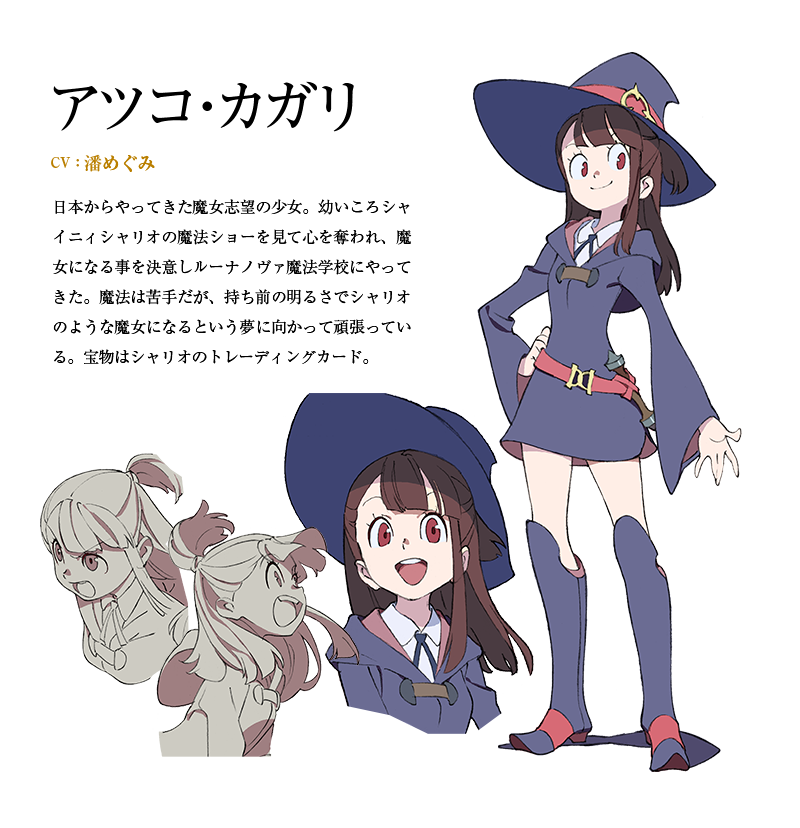
That institutional identity makes Akko’s arrival more than a fish-out-of-water gag. She enters with a different story about magic, formed by watching Shiny Chariot. Her model emphasizes performance, delight, and the emotional connection between a witch and an audience. Luna Nova’s routines place emphasis on study and command. The conflict is not simply that Akko is unprepared; it is that she imagines a purpose for magic that the school does not place at the center of its daily life.
Tradition gives resistance a shape
Old rules can feel restrictive, but without them Akko would have little to push against. Luna Nova makes the terms of her frustration concrete. A beginner can see where she falls short, and a student with an unconventional motive can feel how far her ambitions sit from the institution’s ordinary priorities. The school’s continuity creates friction that a vague fantasy setting could not provide.
The series does not need every teacher or student to be an antagonist for the school to feel resistant. Institutions exert pressure through ordinary expectations, through what gets taught and what is treated as useful. Akko’s struggles therefore carry an argument about education. A school can transmit valuable skills while narrowing the imagination of what those skills are for. Luna Nova is compelling because it can be both a place that teaches Akko and a place whose assumptions she has reason to question.
Reputation shapes what counts as magic
The school’s prestige affects how its values look. If Luna Nova represents a respected path into witchcraft, then its standards can appear self-evident: a proper witch should learn the recognized disciplines, master the accepted routines, and earn standing within that world. The institution’s reputation lends authority to those expectations before Akko has the ability to meet them.
Akko’s entertainment-inspired vision complicates that authority. She values magic for its capacity to captivate and encourage, not only as a body of techniques to be mastered. This does not make formal learning irrelevant; her early difficulty shows why technique matters. Instead, the contrast asks who gets to define the end of education. If skill is the means, Luna Nova’s old rules leave open the question of what the school expects its students to do with it.
An argument that makes room for change
Akko’s position is most persuasive when the series lets her remain a learner. If she were already a virtuoso, her challenge to Luna Nova could read as easy superiority. Because she is a beginner, the school’s lessons have genuine value even as its priorities come under pressure. Her ambition must absorb discipline and practical knowledge if it is to become more than a fond memory of Shiny Chariot’s shows.
This tension gives the series a stronger relationship to tradition than simple rebellion would. Akko need not reject the school to ask it for more; she can take its education seriously while holding onto a purpose the institution does not fully define for her. Luna Nova gives her a structure to learn within and a reputation to contest. The argument, then, is not that old rules have no use. It is that rules are incomplete when they teach students how to wield magic but leave its human purpose to the imagination of a girl who has only just arrived.
Primary work & further reading
Primary work: Little Witch Academia. Character and story readings are editorial interpretations. The publisher reference below identifies the work and its premise.