The weight Guts carries as the Black Swordsman
In Berserk’s opening, Guts arrives as a figure defined by force and distance. His enormous sword makes that strength visible, but the way he carries himself turns the weapon into a sign of what power costs.
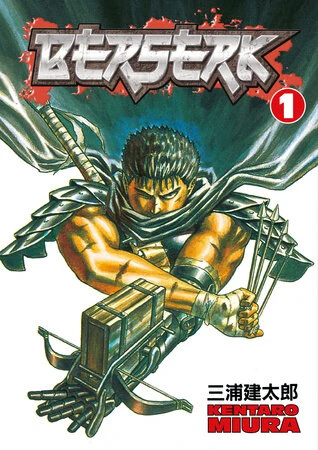
Coverage: Covers Guts’s appearance, guarded manner, and early Black Swordsman material; excludes later revelations and graphic detail.
A silhouette built from weight
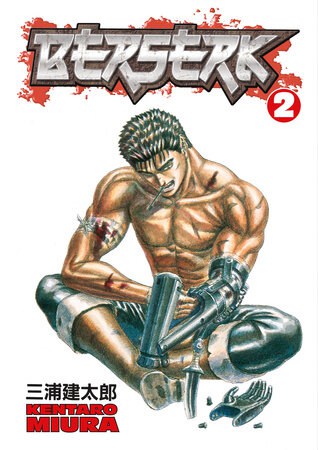
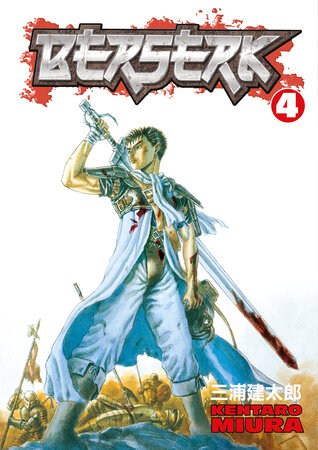
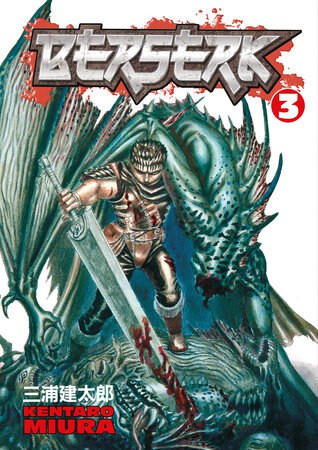
Guts’s first impression is less a portrait than a shape under pressure. The sword rises beside him with a scale that makes ordinary weapons seem irrelevant, while his body appears compact and controlled against its bulk. The image offers a simple reading—this is a man capable of overwhelming force—but its proportions complicate that promise. The sword looks difficult to carry, and Guts carries it as if difficulty were part of its purpose.
That imbalance gives the opening silhouette its tension. Guts does not look free because he is strong; he looks organized around the burden that strength requires. The weapon occupies space before he speaks, announcing the danger he represents and the isolation it produces. Miura’s visual emphasis on the sword therefore makes power feel material: it has weight, demands room, and shapes the posture of the person who bears it.
Force as a form of distance
The Black Swordsman’s guardedness is visible in how little invitation his presence offers. Guts does not arrive as a companion seeking recognition. His attention is directed toward the immediate problem, and his manner leaves little opening for others to interpret him generously. The sword reinforces this reserve. It is not merely equipment that enables action; it is a boundary that makes approaching him seem hazardous.
This distance is not the same as composure. Guts’s hardness reads as something maintained, a way of keeping the world at the range where he can answer it with force. His control has a practical surface, but it also narrows what he can communicate. The opening asks readers to notice that the frightening figure is not made legible by his strength. The more imposing he becomes, the less accessible he seems.
The body pays for the image
The sword’s scale also resists the fantasy that extraordinary power comes without effort. A weapon this large cannot disappear into the action; it affects every pose, every pause, every composition that includes it. Guts must live alongside the sign of his own capacity. The burden is both functional and symbolic, because it makes violence appear inseparable from the labor of remaining ready for it.
That labor gives the character a physical vulnerability even when he appears dominant. His strength is not abstract or effortless; it is embodied in a body that must carry, move, and endure. The artwork’s attention to mass turns a familiar warrior image inside out. Instead of treating the huge blade as a trophy, it makes the blade an obligation that follows Guts wherever he goes.
A guardedness with a cost
The opening’s restraint keeps Guts from becoming a straightforward emblem of toughness. His imposing outline and terse manner create a powerful first impression, but they also suggest how much of his life has been reduced to readiness. To be seen as dangerous may protect him from certain kinds of approach, yet it cannot provide ordinary ease. The sword makes that trade visible: the same object that grants reach also takes up the room where intimacy might begin.
Guts’s silhouette thus makes strength look less like a prize than a condition he cannot set down. The image does not ask the reader to admire the weapon in isolation. It asks what carrying it does to the person who must live behind it. In Berserk’s opening, that question is already present in the line of his shoulders and the shadow of the blade: power can keep danger at a distance, but it can also make distance the shape of a life.
Primary work & further reading
Primary work: Berserk. Character and story readings are editorial interpretations. The publisher reference below identifies the work and its premise.