Atelier Ryza: make AP, Tactics Level, and orders one battle plan
A practical way to read Atelier Ryza’s real-time battles: use basic attacks to build shared AP, raise Tactics Level when AP is full, and answer Action Orders when they fit the moment. The goal is to make each resource serve a clear next step rather than spending it reflexively.
Coverage: Spoiler-light; covers the battle system and progression-unlocked features without story outcomes.
Read the battle as a shared system
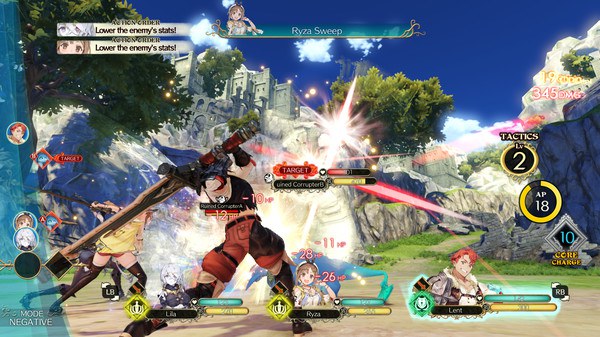
Atelier Ryza’s battles run in real time while allies act automatically, and the player can spend Action Points (AP) on additional actions. The official manual distinguishes a basic attack, which increases AP, from a skill, which consumes it. AP is shared by the party and exists only during battle; it does not carry over after the fight. So the first useful question is not “which skill is strongest?” but “what should this shared resource make possible next?” [1] [2]
The timeline makes that question concrete. It shows when an ally or enemy can act, while the player’s chosen character takes direct actions and other party members move automatically. Watching the timeline lets you decide whether to build resources, interrupt a threat, or spend AP before an enemy gets another turn. The manual notes that actions and enemy weaknesses matter, so this is a planning tool rather than a universal rotation. [1]
Build AP before spending it all
A basic attack is not merely a low-cost fallback: it builds AP. Skills spend AP, while filling the gauge to its maximum creates the opportunity to raise Tactics Level, up to level 5. Higher Tactics Levels can add hits to normal attacks, increase maximum AP, improve skill levels or effects, and grant increased experience from level 3. That makes the resource loop two-sided: the same AP can fuel an immediate skill or contribute to a stronger later state. [1] [2]
A useful default is to spend only when a skill solves a current problem: exploiting an enemy weakness, helping an ally survive, or responding to an Action Order. When the gauge is close to full, consider whether the next action should instead prepare a Tactics Level increase. This is not a rule to hoard AP. It is a way to avoid using a skill simply because the command is available, then reaching a full gauge without a clear plan.
Treat Tactics Level as an investment
Raising Tactics Level changes more than a label. At higher levels, ordinary attacks can chain more hits, maximum AP rises, and some skills gain extra effects. Since the official manual lists these benefits, the practical implication is that a longer encounter can reward preparing a stronger baseline before spending heavily. The exact value depends on the battle and skills equipped; the manual does not prescribe one optimal level for every enemy. [2]
Try a small decision cycle: build AP with basic attacks, use the full gauge to raise Tactics Level, then spend the larger pool on a skill whose element or effect addresses the enemy in front of you. Notice whether the new level changes the value of that skill or the next normal attack. The manual states that attacks matching an enemy weakness deal more damage and that skills have listed AP costs. Looking at both details before acting helps connect setup to payoff. [1]
Answer orders when the prompt fits your plan
Action Orders are suggestions from other party members. Meeting the requested condition unleashes an Order Skill. The manual gives examples such as performing a physical attack or dealing fire damage, and says the feature becomes available as the story progresses. If an order matches what you already need to do, it can add a follow-up to a sensible action. If it asks for an awkward choice, the player can weigh that request against the enemy’s next turn and the party’s AP. [3] [4]
Extra Orders add a timing question. The manual says a Quick Action before certain powerful enemy attacks can issue an Extra Order, and a Quick Action while an enemy is stunned can also do so (but not when it is in Break status). That turns an interrupt into a chance to follow through. It is useful to watch the enemy’s state and order text together, rather than spend a Quick Action automatically whenever the command appears. [3]
Use a short review after each fight
After a difficult battle, check three things: Did basic attacks build AP when you needed it? Did raising Tactics Level produce a benefit before the fight ended? Did an Action Order align with your intended move? These questions separate a resource problem from an equipment or party problem. If AP was always scarce, spend fewer skills early. If Tactics Level rose too late to matter, use basic attacks with more intention. If orders were missed, look for the requested action and whether it fits your next move.
The system is designed around an exchange between immediate actions and preparation. KOEI TECMO describes AP as both a way to trigger skills and increase attacks, and as a resource for raising Tactics Level and improving skill effects. That description supports a flexible plan: build, invest, spend, and respond, in a rhythm shaped by the enemy and the party rather than a rigid sequence. [4]
Primary work & further reading
Primary work: Atelier Ryza: Ever Darkness & the Secret Hideout. Character and story readings are editorial interpretations. The publisher reference below identifies the work and its premise.