Gathering for a purpose in Atelier Ryza's first alchemy loop
In Atelier Ryza, gathering tools shape what you bring home, while elemental values, quality, traits, and recipe-node choices shape what synthesis can do. Learn how to weigh a useful Bomb or routine craft against saving a better ingredient for equipment before setting out again.
Coverage: Covers the first game’s early gathering, synthesis, equipment, and exploration systems only; no later-game systems or story revelations.
Choose a gathering tool for the materials you need
Early gathering is not just a matter of visiting a spot and taking everything it offers. The tool Ryza uses affects which materials that spot yields, so returning with a different tool can change the haul. If you need water, plants, or ore for a recipe, pay attention to the tool you have equipped and what the gathering point produces with it. A familiar patch of the island can be useful for different purposes depending on how you approach it.
Treat each outing as a chance to bring back ingredients for a specific need. A Bomb is a real early synthesis item, so if you want one, gather with that craft in mind and check your results before assuming you have the right inputs. Materials also carry elemental values, quality, and traits. Those properties make two items in the same broad category potentially useful in different ways, giving you a reason to inspect what you collected instead of treating every pickup as interchangeable.
Read elemental requirements before spending ingredients
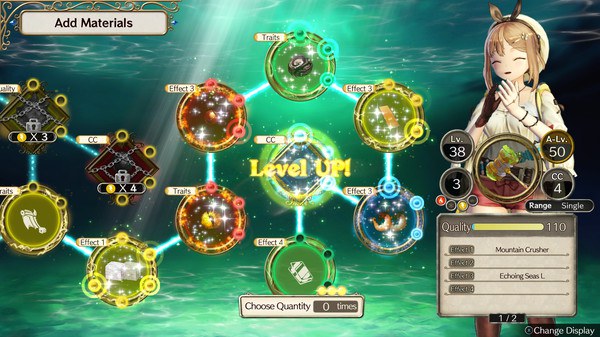
Synthesis in Ryza is organized around recipe nodes with elemental requirements. Ingredients contribute elemental values alongside quality and traits, and placing them into the recipe can fill nodes, change effects, or open other nodes. The order of your decisions matters: look at the requirements and current result as you add ingredients, then decide which available material is worth committing to that step.
You cannot fill every node freely at once because ingredient placements are limited. That constraint turns synthesis into a choice about priorities: which effect matters for the item you want now, and which nodes can wait? If a node becomes available after another is filled, it may lead to a different effect or further options, but the materials you already used are no longer available for another craft. Avoid planning around an assumed exact recipe or threshold; follow the recipe shown in your game and make decisions from its visible requirements.
Save a strong ingredient for the job that needs it
Because ingredients can serve multiple purposes, a good-quality material has an opportunity cost. Suppose you have one especially high-quality plant and enough ordinary ingredients for a routine synthesis. Using the strong plant now may improve that item, but keeping it could make a later piece of equipment better. If the routine craft solves an immediate need without it, use the ordinary material and reserve the stronger one for equipment you expect to carry into the field.
Quality is only one part of an ingredient’s value. Its elemental contribution or trait may help satisfy a particular node or shape an effect, so check those details before spending a material simply because its quality looks impressive. Conversely, saving every good ingredient can leave you short of a useful item when you need it. Make the tradeoff concrete: use the better ingredient when its contribution supports the result you care about now; otherwise, hold it for a craft with a clearer purpose.
Take the result back into exploration
Once synthesis is finished, equip the item you intend to use before leaving the atelier. That small step connects the recipe choices to the next trip: the result is now part of Ryza’s preparation rather than an object sitting in storage. If a previous outing showed that the party needed a different tool or a more useful crafted item, adjust what you bring and head back out with that need in mind.
Exploration then tells you what to gather next. A spot may yield different materials when approached with another early tool, or the next recipe may call for ingredients with elemental values or traits you have not prioritized yet. Bring those observations back to synthesis, where recipe nodes and limited placements ask you to choose again. The practical rhythm is simple: gather for a purpose, read the recipe’s requirements, spend ingredients according to their value, equip the result, and let the next outing reveal what your workshop should make possible.
Primary work & further reading
Primary work: Atelier Ryza. Character and story readings are editorial interpretations. The publisher reference below identifies the work and its premise.