Odd Taxi's comedy depends on people talking past each other
Odd Taxi finds its humor in mismatched conversations: people pursue private goals while sharing the same space. The result is funny in the moment and useful to the mystery, because each exchange leaves behind details its speakers barely register.
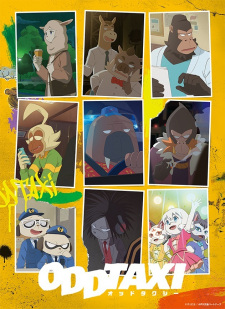
Coverage: Discusses early-series conversational comedy and mystery setup; does not reveal the final solution.
A conversation is rarely the same conversation
Odd Taxi’s comedy often begins with two people who appear to be talking together but are pursuing different aims. One person wants to sound impressive; another wants to get through a shift. Someone asks for attention, while the listener is preoccupied with a separate problem. The mismatch gives an exchange its rhythm. A remark lands beside the point the other person thinks they are discussing, and the gap can be funnier than a punchline would be.
The series makes this especially effective in Odokawa’s cab, where passengers have a reason to keep talking and the driver has a reason to keep listening. Their conversation has the shape of an ordinary service interaction, but it can drift into a personal monologue or an awkward contest for recognition. The cab is not a stage built for comic timing; the characters bring their own agendas into it. That makes the humor feel observed. People do not stop being self-involved just because someone else is present.
Different priorities create the punchline
A mismatch becomes comic when the characters assign different importance to the same moment. A passenger may treat a small social opening as a chance to impress, while Odokawa responds with practical bluntness. Elsewhere, a character’s ambitions can sound inflated beside the mundane details that actually shape the day. The joke does not require the series to announce who is foolish. It lets the contrast sit there long enough for the audience to see what each person values and what the other person has failed to notice.
That style of comedy also gives the cast distinct voices without relying on a parade of catchphrases. The characters differ in what they want from a conversation: approval, information, sympathy, leverage, or simply a way to pass time. Their speech reveals those priorities even when they believe they are concealing them. A self-conscious boast can tell us more than an earnest explanation, because the boast shows what the speaker thinks needs proving. Odd Taxi’s humor often comes from that unintended disclosure.
The laugh leaves a detail behind
Because the conversations are funny, their informational work can arrive quietly. A passenger may mention a routine or a connection while focused on a more immediate concern. The exchange does not pause to underline the remark as important. Instead, the viewer has to keep it in mind as one piece of a larger social picture. Comedy and mystery share the same material: people speaking from their own priorities, unaware of how their words might look from another person’s seat.
This does not mean that every joke is a coded clue. Treating every stray line as a puzzle would flatten the show’s social texture. The more productive habit is to notice how ordinary talk accumulates. A comment can matter because it reveals what a character notices, or because it sits beside a detail from another conversation. The series lets humor hold attention while the shape of the city gradually becomes clearer. We laugh at the immediate miscommunication, then realize that the exchange has also shown us how these people move through their lives.
Rhythm keeps the mystery human
The pacing depends on giving a conversation enough space to be awkward. A sharp response can arrive after a pause, or a topic can keep going after its listener has quietly withdrawn. That rhythm keeps the cast from sounding like people delivering plot points on cue. They interrupt, boast, wander, and misunderstand. The mystery can use information from those moments because the moments first feel like something characters might actually do when they are not aware of being watched.
The result is a distinctive balance: a scene can be amusing without being disposable, and a useful detail can appear without changing the conversation into an explanation. This balance makes the audience’s role more active. We are free to enjoy the characters’ crossed purposes, but we can also notice how little any one of them understands about the others. Odd Taxi’s comedy depends on people talking past each other because the gap is where character and evidence meet. The joke lasts for a moment; the impression of the speaker, and the detail they let slip, can last much longer.
Primary work & further reading
Primary work: Odd Taxi. Character and story readings are editorial interpretations. The publisher reference below identifies the work and its premise.