Frieren’s Stark shows that courage begins before the sword is raised
Stark’s fear in Frieren’s village-hero episode is not an obstacle to his strength; the story treats hesitation as part of what makes his eventual choice consequential.
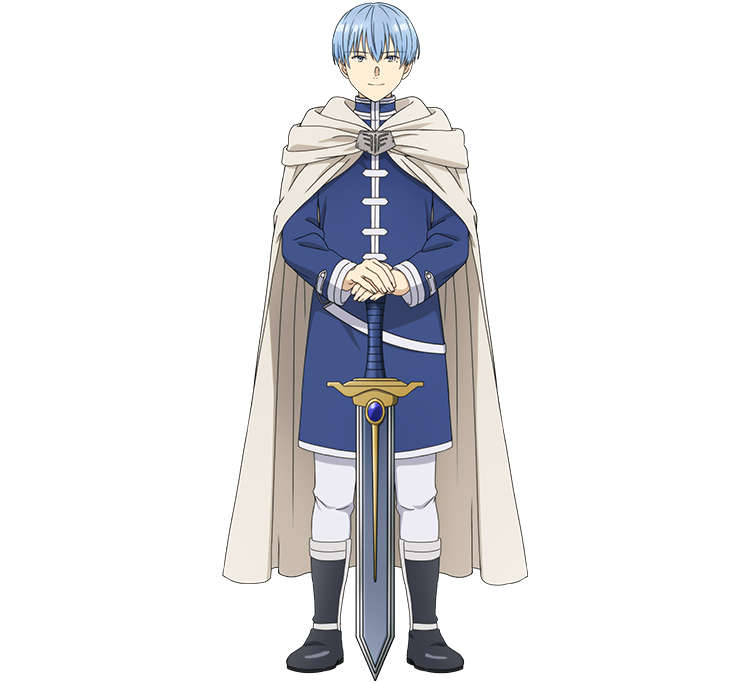
Coverage: Spoiler-light for Frieren episode 6: discusses Stark’s introduction and the village’s encounter with the Red Mirror Dragon.
The village already has a story about its hero
Frieren introduces Stark through a mismatch between public reputation and private feeling. The official episode 6 synopsis says he is praised as the hero who protected a village from the Red Mirror Dragon, yet describes him as extremely timid. Frieren sees his ability and asks him to join her in defeating the dragon; even with strength enough to split a boulder, his hands continue to tremble. The episode sets those facts beside each other rather than asking us to choose which one is the “real” Stark. [1]
That pairing gives the title of village hero a slightly uneasy sound. The villagers can point to an outcome and name him brave, but Stark still has to live inside the fear that comes before the next fight. His story is not a reveal that he was secretly fearless all along. Instead, the gap between what others believe and what he feels becomes the ground on which the episode builds its idea of courage.
Strength does not erase the moment of choice
The boulder image is useful because it makes Stark’s physical capacity visible, while the trembling hands make fear visible at the same time. The official synopsis explicitly places these details together. Neither one cancels the other: being able to cut through stone does not automatically make a dangerous opponent feel manageable, and fear does not prove that the strength is false. The scene resists the familiar shortcut in which a strong character is treated as calm simply because the audience knows what he can do. [1]
That distinction changes how we understand a decision to fight. If Stark acted only after fear had disappeared, his courage would be hard to distinguish from confidence. The episode instead asks whether he will appear at all while his hands still shake. The question is practical and intimate: can he choose to protect someone while carrying the fear with him? The answer matters more because the story does not pretend the feeling has been solved in advance.
Praise can become another pressure
Being called a hero sounds like a reward, but it can also become a role someone feels obliged to keep performing. The official episode summary says the village praises Stark for its protection, then shows Frieren assessing him by his ability and inviting him into a new fight. That combination places external expectation on both sides: the village remembers a protector, and Frieren sees a capable fighter. Stark has to decide whether either expectation describes what he is ready to do now. [1]
The episode’s tension does not come from a lack of evidence that Stark can fight. We have the boulder and Frieren’s judgment. It comes from the fact that proof of ability cannot make the decision for him. This makes the hero label less like a permanent status and more like a claim that has to be renewed in a specific moment, under specific fear. The story gives Stark room to be a person rather than a role by showing how costly that renewal feels.
A companion’s confidence is not a substitute for consent
Frieren’s confidence in Stark is important, but it cannot take his place in the decision. She recognizes his strength and asks him to help defeat the dragon; the synopsis leaves the central question open by asking whether he will come to the battle. That structure protects his agency. Another character can see what he is capable of, but Stark still has to move from that assessment to an action. The encouragement matters because it is an invitation, not because it magically removes the risk. [1]
This is a useful way to read the party’s growing relationships. Trust can mean noticing another person’s ability before that person is ready to claim it, but it should not mean pretending fear is irrelevant. Stark’s decision has weight because the people around him do not fight in his place. Their confidence can make the possibility visible; his choice makes it real.
Courage remains a practice
The official character index lists Stark among the central figures in the series, while episode 6 gives his first defining contradiction: a praised protector who is frightened and powerful at once. Reading the episode through that contradiction makes courage less like a personality trait and more like a practice. It is not a permanent supply of bravery that one either possesses or lacks. It is a choice made in the presence of a feeling that may continue to argue against the choice. [1] [2]
That is why Stark’s trembling is not a detail the story needs to overcome before he can matter. It is part of the evidence that the decision costs him something. The episode lets strength, fear, public praise, and private uncertainty share the same frame. By doing so, it offers a more human form of heroism: not the absence of hesitation, but the willingness to take responsibility while hesitation is still there.
Primary work & further reading
Primary work: Frieren: Beyond Journey's End. Character and story readings are editorial interpretations. The publisher reference below identifies the work and its premise.