Fire Emblem: Three Houses battalions are a preparation choice
A practical guide to assigning battalions around a unit’s role and the map ahead, with a simple pre-battle checklist for matching stat support and gambit utility.
Coverage: Spoiler-light: focuses on systems and broad story framing, avoiding later plot turns.
A battalion changes more than one number
In Fire Emblem: Three Houses, assigning a battalion gives an officer-in-training a stat boost and access to a gambit, according to Nintendo’s overview. That makes assignment a paired decision: the unit receives support, and the army gains an action with a particular tactical role. Choosing by the biggest visible bonus alone can overlook whether the gambit helps with the map’s problem. [1] [2]
Battalions therefore work best when you ask what the unit is expected to do. A frontline unit may need support that helps it hold position; a mobile unit may benefit from an action that supports the group as it advances. The details vary by available battalion and class, so this guide is a planning method rather than a claim that one named battalion is always best.
Match the gambit to the map’s bottleneck
Nintendo describes gambits as troop-based attacks that can cause status effects, help allies or hinder enemies. It also notes that nearby classmates can coordinate for a Gambit Boost, with bonds between students affecting that boost. Those functions suggest a map-first approach: decide whether the coming battle asks you to control an enemy, support an advance, or make a coordinated strike. [2]
For example, if the objective requires crossing a narrow lane guarded by several enemies, a gambit that disrupts or controls space may be more useful than choosing solely for a stat increase. If your plan centers on a coordinated attack, consider which nearby allies can support the action. This is strategic interpretation of Nintendo’s described functions; exact results still depend on the unit and battalion in your own save.
Check endurance before the mission
Battalion readiness is easy to ignore while concentrating on weapons and class skills. Yet Nintendo’s support history includes a correction concerning how battalions were ordered by endurance, which confirms that endurance is a tracked part of managing them. Before a major battle, review whether the battalion assigned to a key unit can do the work you expect. [1]
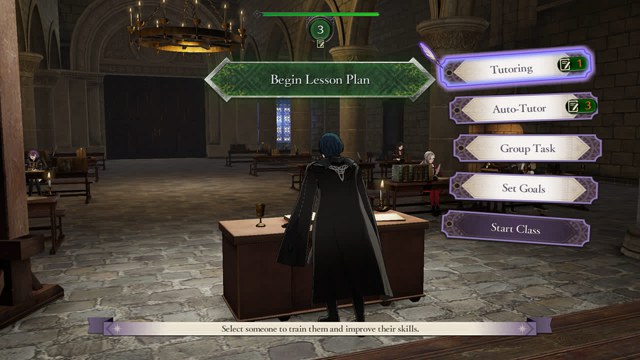
A useful routine is to inspect the unit’s current assignment, check whether the gambit is relevant, and look at endurance before deploying. If a battalion is depleted or poorly matched, consider hiring or assigning another from the monastery’s preparation options. The purpose is to avoid discovering mid-plan that the unit’s support is not ready for the role you gave it.
Build a small roster of different answers
It is rarely necessary for every unit to carry the same kind of support. A roster with varied gambit functions gives the player options when the terrain or enemy arrangement changes. One unit can be prepared to disrupt, another to help allies, and another to support a coordinated push. This does not mean every possibility must be covered; it means a few deliberate choices can prevent the whole army from depending on one response. [2]
The monastery’s hiring and assignment options make this preparation concrete. Use them to fill a role the current roster lacks rather than replacing every battalion whenever a new one appears. If the army already handles enemy control but struggles to support a vulnerable advance, prioritize the gap you can identify.
A short pre-battle review
Before leaving the monastery, identify the map’s main obstacle, choose one unit whose role addresses it, confirm that unit’s battalion and gambit, and check whether nearby allies can contribute to a boost. Then begin the battle with a plan you can test. If the gambit is never useful, the assignment or the map reading may need revision next time. [1]
This keeps battalions from becoming passive bonuses buried in a menu. Their value comes from combining a unit’s role, a tactical action and the army’s position. You do not need a perfect forecast; you need a clear reason for the assignment and enough flexibility to change course when the battle develops differently.
Primary work & further reading
Primary work: Fire Emblem: Three Houses. Character and story readings are editorial interpretations. The publisher reference below identifies the work and its premise.